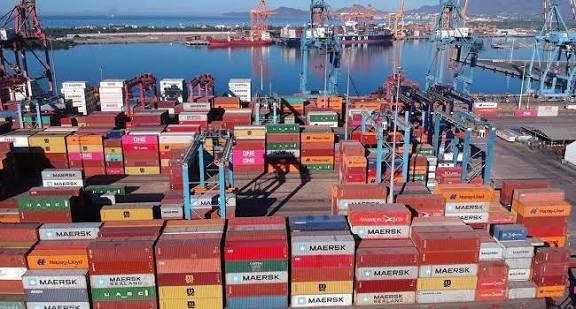
The Federal Government has announced plans to elevate Nigeria’s ports into the top three most efficient trade gateways in Africa, with the implementation of the National Single Window (NSW) set for 2026.
Vice-President Kashim Shettima revealed the initiative during the second meeting of the Ports and Customs Efficiency Committee at the Presidential Villa in Abuja, describing the NSW as a “game changer” for cargo clearance across the nation’s ports.
“The forthcoming implementation of the National Single Window in the first quarter of next year will harmonise documentation, reduce human contact, and ensure full transparency in cargo clearance,” Shettima said.
“Our target is to cut the average cargo clearance time from 21 days to less than seven days by the end of 2026, placing Nigerian ports among the top three most efficient trade corridors on the continent.”
Shettima noted that cargo dwell times in Nigeria currently average 18 to 21 days, far above regional competitors such as Ghana (5–7 days) and Cotonou, Benin Republic (4 days).
He also highlighted the high cost of clearing goods in Nigeria, estimated to be 30 per cent higher than regional peers, warning that these inefficiencies increase consumer prices, reduce investment, and weaken export competitiveness.
The Vice-President directed the Nigerian Ports Authority (NPA), Nigerian Customs Service (NCS), NAFDAC, SON, and other agencies to develop a cohesive roadmap to enhance Nigeria’s weights and measures framework.
He emphasised that the “era of siloed operations must end,” urging agencies to operate as a single, integrated value chain.
Shettima also expressed support for the Executive Order on Joint Physical Inspection, currently before President Bola Tinubu, describing it as a decisive step toward reducing inefficiencies and improving predictability, transparency, and speed for traders and investors.
Zahrah Audu, Director-General of the Presidential Enabling Business Environment Council (PEBEC), highlighted the impact of port inefficiencies on the Ease of Doing Business in Nigeria and called for collective commitment to enhance cargo clearance.
Meanwhile, NPA Managing Director Dr. Abubakar Dantsoho noted that inter-agency collaboration is central to revamping port operations.
He cited technological adoption, infrastructure improvements, human capacity development, and the provision of equipment as key areas for boosting efficiency.
Dr. Dantsoho praised the successes of the Customs and Ports Efficiency Committee, particularly in joint inspections and coordinated operations, stating that such measures will ensure Nigeria remains competitive both regionally and globally.
With these reforms, Nigeria aimed to position its ports as a reliable, transparent, and world-class gateway for trade, attracting investment and facilitating smoother logistics for businesses across the continent.