The Federal Government of Nigeria has reiterated its determination to eliminate HIV/AIDS as a public health threat by 2030, joining the global community in marking the 2025 World AIDS Day.
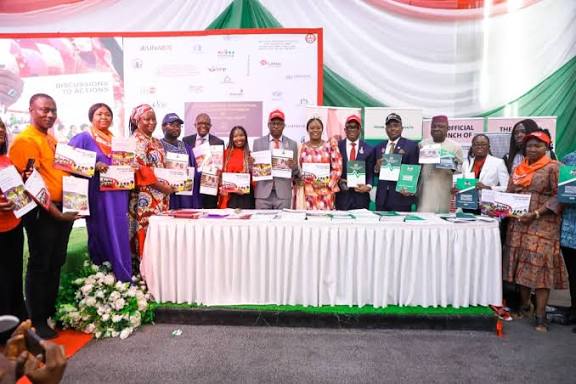
The national commemoration, held at the State House on Monday, carried the theme “Overcoming Disruptions; Sustaining Nigeria’s HIV Response” and was organised in partnership with the First Lady’s Renewed Hope Initiative (RHI).
Minister of State for Health and Social Welfare, Dr. Iziaq Salako, highlighted the government’s investments of over N300 billion in programs aimed at strengthening the country’s HIV/AIDS response.
According to him, Nigeria has expanded domestic funding for HIV interventions, reducing dependence on foreign aid, while boosting local production of antiretroviral drugs and HIV test kits to ensure long-term sustainability.
Dr. Salako said that approximately 1.6 million Nigerians are currently on antiretroviral therapy, out of an estimated 1.9 million living with the virus, reflecting significant progress in testing, counseling, and treatment coverage.
He also referenced the 2024 launch of the Free to Shine Campaign, championed by the First Lady, aimed at eliminating HIV, syphilis, and tuberculosis, particularly preventing mother-to-child transmission.
Speaking at the event, Senator Oluremi Tinubu underscored the progress made in HIV prevention, treatment, and care, emphasising that continuous commitment is necessary to ensure all Nigerians in need have access to life-saving services.
She stressed that ending AIDS requires compassion, innovation, and sustained advocacy, while also addressing stigma and discrimination to guarantee non-judgmental healthcare access for all.
The First Lady highlighted that national efforts in the past year focused on eliminating vertical transmission, expanding pediatric HIV treatment, and strengthening local sustainability of the HIV response across all states.
She commended the Global Fund to Fight AIDS, Tuberculosis and Malaria, the National AIDS and Sexually Transmitted Diseases Control Programme (NASCP), and the National Agency for the Control of AIDS (NACA) for their support, noting that combined efforts have significantly bolstered the national HIV response.
Mrs. Tinubu cautioned that Nigeria’s HIV response remains heavily reliant on donor funding despite shifting global financing trends.
She disclosed that the government had approved a disbursement of 200 million dollars to support HIV, tuberculosis, and malaria programs and urged state governments to assume long-term ownership of the national response.
Director-General of NACA, Dr. Temitope Ilori, reported that stigma is gradually declining and Nigeria remains on course to end AIDS as a public health threat.
She noted that challenges such as the COVID-19 pandemic, economic fluctuations, and declining donor support have strengthened the country’s resolve to build a more sustainable, homegrown HIV response.
Adult HIV prevalence has dropped to 1.4 percent, reflecting improved treatment access and testing coverage.
The Head of the Civil Service of the Federation, Mrs. Didi Esther Walson-Jack, represented by Permanent Secretary Daju Kachollom, described the national effort to sustain HIV services amid disruptions as both timely and crucial.
She highlighted that HIV programs continue to be integrated into broader health-sector reforms, including the Health Sector Renewal Initiative and the revitalization of primary healthcare, ensuring resilient service delivery nationwide.