Education minister flags “learning emergency” in Nigeria, proposes comprehensive reforms

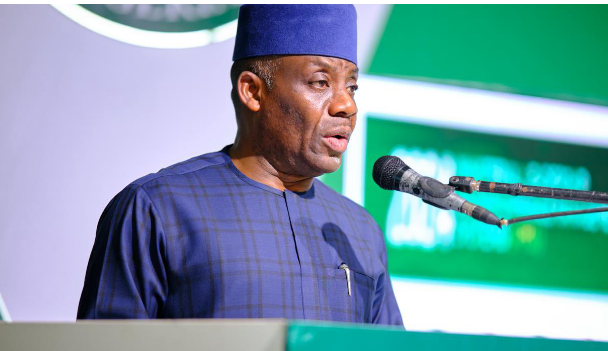
The Minister of Education, Dr. Tunji Alausa, has warned that Nigeria is facing a “learning emergency” in its education sector, citing alarming literacy and numeracy deficits among schoolchildren.
In a position paper released on Tuesday, Alausa stressed that despite high school enrolment, approximately 45 million children aged 7 to 14 are unable to read a simple sentence, highlighting an urgent need for systemic reforms.
Quoting UNICEF data, the minister said the crisis is geographically uneven.
The North-west bears the heaviest burden, with literacy and numeracy rates at 9.4 per cent and 8.3 per cent respectively, followed by the North-east with 12 per cent and 10.7 per cent.
The North-central registers 24.3 per cent literacy and 22.7 per cent numeracy, the South-west 45.8 per cent and 46.7 per cent, the South-south 37 per cent and 34 per cent, while the South-east leads with 55.8 per cent literacy and 52 per cent numeracy.
“The data shows that Nigeria’s children face a severe learning crisis, and some regions are far behind in both literacy and numeracy.
This gap between school attendance and actual learning reflects a system-wide decline in education quality,” Alausa said.
In response, the Ministry of Education is implementing a sweeping reform package aimed at improving teaching quality, learning outcomes, and foundational skills acquisition. Initiatives include:
Teacher Development: Review of pre-service teacher training, nationwide capacity building for teachers, school leaders, and monitoring officers, and digital training programs with incentives.
Teacher Collaboration: Establishment of Teacher Communities of Practice (CoP) to enhance professional learning.
School Oversight: School grading, Safe Schools Initiative, revised UBEC guidelines, results-based financing, and partnerships with private schools to reduce out-of-school children.
Curriculum and Language Policy: Ongoing review of language-in-education policies to ensure learners acquire cognitive and literacy skills effectively in their first language, while also preparing them for English-medium instruction.
Alausa highlighted that inclusive language-in-education policies are central to Nigeria’s education reform under the Renewed Hope Agenda of President Bola Tinubu. “Evidence shows learners acquire skills more effectively in their mother tongue,” he said.
He referenced Nigeria’s National Policy on Education across multiple editions, which advocates for mother-tongue instruction in pre-primary and lower primary schools.
With over 500 indigenous languages and English as the official language, Nigeria faces operational complexities in implementing mother-tongue instruction.
Alausa noted that teachers deployed outside their linguistic regions struggle to instruct in local languages, and students from diverse backgrounds may not understand the local mother tongue, raising inclusivity concerns.
Other challenges include limited development of orthographies and learning materials in many languages, inconsistent teacher training in multilingual pedagogy, social and regional preferences for English, funding gaps, and uneven curriculum implementation across states.
“At the end of the day, all students write national examinations in English. This transition is difficult and often disadvantages learners in certain regions,” he explained.
The minister also acknowledged that the integration of digital learning post-COVID offers opportunities, but most content is not available in local languages, which reinforces linguistic exclusion.
To address these challenges, Alausa outlined a five-pronged strategy: policy renewal and harmonization; teacher preparation and capacity building; curriculum and material development; technology integration for language inclusion; and ensuring inclusive English-medium instruction to promote equitable access to national examinations and job opportunities.
“Meaningful learning begins with understanding,” he said. “Whether it is a girl in Sokoto, a boy in Borno, a nomadic child in Plateau, or learners in Rivers, Ekiti, or Enugu, education in a language they comprehend builds confidence, dignity, and agency.
” Nigeria is committed to an education system where no child is disadvantaged by language, supported by political will, partnerships, funding, and regional collaboration.”