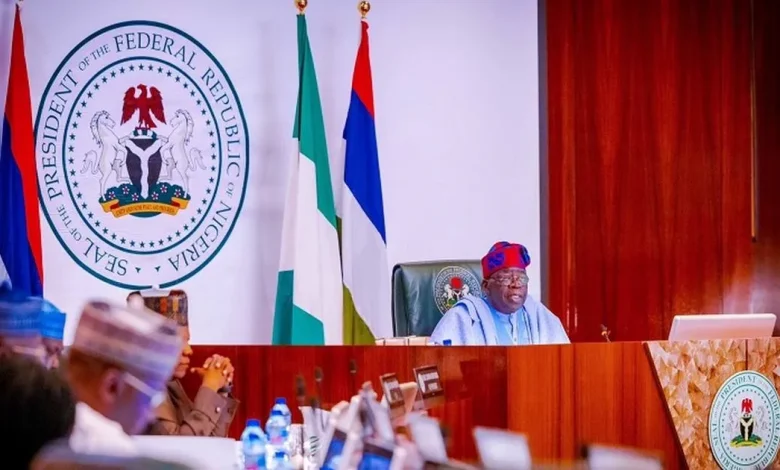
The Federal Executive Council (FEC) on Wednesday concluded its 10th meeting of 2025 with a series of major approvals aimed at boosting youth entrepreneurship, agricultural development, infrastructure, and social welfare across Nigeria.
Presided over by President Bola Tinubu at the State House, Abuja, the council sanctioned a $100 million African Development Bank (AfDB) loan to establish the Youth Investment Fund.
The programme is designed to support Nigerian entrepreneurs aged 18 to 35 operating micro, small, and medium enterprises (MSMEs).
Finance Minister and Coordinating Minister of the Economy, Wale Edun, explained that the fund would provide equity, debt, grants, and other financial instruments to empower young people at the grassroots level.
FEC also approved financing from the Islamic Development Bank for the UBAS Integrated Agricultural Development Project, a long-term concessional facility aimed at fostering inclusive growth and strengthening the country’s agricultural sector.
In addition, a new $50 million agricultural development project for Bauchi State was approved to enhance capital budgeting and restore the January–December budget cycle.
Highlighting the fiscal agenda, Edun said the 2026–2028 Medium-Term Expenditure Framework (MTEF) and Fiscal Strategy Paper were presented, with President Tinubu stressing the need for strict prioritisation of government spending.
The President directed ministries, departments, and agencies (MDAs) to channel capital expenditure into growth-enhancing projects, strategic infrastructure, and programmes with high economic impact.
Edun cited National Bureau of Statistics figures showing Nigeria’s economy grew by 3.89% in Q3 2025, driven by expansions in agriculture and industry, while inflation eased.
However, he noted the growth remains below the administration’s 7% annual target.
Minister of Budget and Economic Planning, Atiku Bagudu, elaborated that the adopted MTEF was developed in collaboration with the Economic Management Team, private sector, civil society, and development partners.
Key assumptions include a benchmark oil price of $64.85 per barrel, production of 1.8 million barrels per day, and an exchange rate of N1,512 to the dollar for the 2026 budget.
Total federal revenue is projected at N34.33 trillion, down 16 per cent from 2025 estimates, with statutory transfers at N3 trillion, debt servicing at N10.91 trillion, and personnel costs at N15.27 trillion, leaving a projected deficit of N20.1 trillion (3.61% of GDP).
Bagudu noted President Tinubu’s directives for stronger coordination between fiscal and monetary authorities, increased investment in security and training institutions, and tighter measures to plug revenue leakages in oil, gas, and solid minerals sectors.
He stressed the priority on transformative infrastructure capable of driving long-term growth, emphasising that a stabilised macroeconomy and diligent MTEF implementation would underpin the Renewed Hope agenda.
On capital expenditure, Edun reported that the 2024 capital budget has been largely fulfilled, while the 2025 capital releases are ongoing and expected to conclude by December 30.
He explained that some projects will naturally roll over into 2026, with the Ministry of Budget and Economic Planning leading the preparation of 2026 proposals.
The council also approved the establishment of agricultural mechanization service centres across Nigeria’s six geopolitical zones and the deployment of 4,000 communication towers to underserved communities.
Minister of Information and National Orientation, Mohammed Idris, said the mechanisation centres would enhance year-round farming, boost local food production, and create jobs, while expanded connectivity would improve economic activity and security for 23 million Nigerians lacking adequate communication infrastructure.
Minister of State for Health, Dr. Ishaq Salako, highlighted sustained investment in health under the 2024–2028 fiscal framework, reporting the completion of over 4,000 primary health centres with another 8,000 scheduled for upgrades.
He also noted major achievements in immunisation, including the protection of 14 million children with the HPV vaccine and nearly 30 million with the rubella-measles combined vaccine.
The meeting also included oaths of office for five newly appointed Permanent Secretaries, the Chairman of the National Population Commission, and two other commissioners.
The council observed a minute of silence in honour of Ambassador Joy Uche Ogwu, former Minister of Foreign Affairs and Nigeria’s Permanent Representative to the UN, who passed away at 79.
The approvals signal a continued push for inclusive, job-rich growth, strengthened security infrastructure, enhanced human capital, and improved social welfare across Nigeria, laying the groundwork for the 2026 Appropriation Bill and the continued implementation of the Renewed Hope agenda.