The Senate Committee on Local Content has issued a firm warning to operators in the oil and gas industry, declaring that Nigerians must now take centre stage in the nation’s economic activities rather than remain on the sidelines.
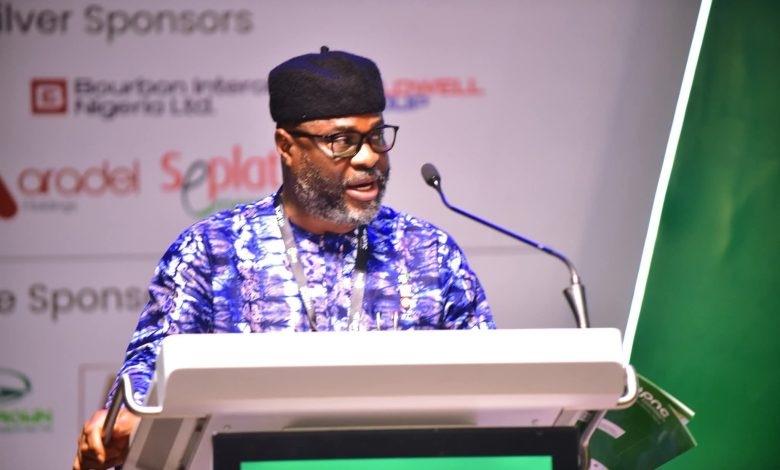
Committee Chairman, Senator Joel-Onowakpo Thomas, delivered the message on Monday at the opening of the 14th Annual Practical Nigerian Content (PNC) Forum in Yenagoa.
Addressing an audience of government officials, industry executives and international partners, he said the period of superficial compliance with local content laws had come to an end.
According to him, the National Assembly is moving into a new phase of rigorous enforcement to ensure that the Nigerian Oil and Gas Industry Content Development (NOGICD) Act, the Nigeria First Policy, and Presidential Executive Order No. 5 translate into measurable gains for citizens.
The chairman was accompanied by the committee’s vice chairman, Senator Ede Dafinone, along with members Senator Abdul Ningi, Senator Sharafadeen Abiodun Ali and Senator Victor Umeh.
Senator Joel-Onowakpo observed that despite decades of petroleum exploration and more than a decade of implementing the NOGICD Act, Nigeria still struggles to meet its local content goals.
He described this gap as a long-running failure that must now be corrected.
“We cannot continue to act as though we have made sufficient progress.
“Those days are over. Nigerians must become active participants and direct beneficiaries of the wealth generated from their own soil, ” he said.
He reiterated the committee’s alignment with President Bola Ahmed Tinubu’s broader economic reforms, particularly the Nigeria First Policy, which compels government ministries and major industries to prioritise Nigerian expertise and locally produced goods.
The senator referenced Section 28 of the NOGICD Act, which requires companies to submit succession plans showing how expatriate-held positions will transition to Nigerians.
He alleged that some firms still flout this provision, citing a recent case involving Chevron, which reportedly proposed replacing a retiring Nigerian procurement director with a foreign national.
“That is completely at odds with the spirit and letter of the law,” he said, warning that the committee is prepared to apply its full oversight authority to ensure that such positions are genuinely localised after the mandated four-year period.
Senator Joel-Onowakpo also highlighted the continuing relevance of Executive Order No. 5, introduced in 2018 under former President Muhammadu Buhari.
The order obligates procuring entities to prioritise Nigerian companies and demands that foreign firms demonstrate concrete strategies for building local capacity before winning public projects.
He argued that strict adherence to the directive would significantly limit capital flight, enhance local competence and generate more employment opportunities.
The chairman stressed that the conversation must extend beyond job creation to include worker safety, professional development and serious investment in research.
He reminded the audience that Sections 35 to 39 of the NOGICD Act require sustained funding for human capital development.
“These clauses are not decorative. They are legal obligations,” he said. “Indiscriminate waivers and lax monitoring only undermine Nigeria’s long-term competitiveness.”
Senator Joel-Onowakpo urged International Oil Companies (IOCs), National Oil Companies (NOCs) and service contractors to embrace the government’s renewed drive for transparency and sustainable local participation.
“This message is both a reaffirmation of our commitment and an open call to our partners.
“If we work together, we can strengthen local content compliance and open up real economic opportunities for millions of Nigerians,” he said.
The 14th Practical Nigerian Content Forum, themed “Securing Investment, Strengthening Local Content, and Scaling Energy Production,” continues this week, serving as a critical venue for evaluating Nigeria’s local content performance and charting new strategies for industry growth.