The President of the Nigerian Association of Road Transport Owners (NARTO), Yusuf Othman, has expressed deep concern over ongoing inefficiencies, extortion, and operational bottlenecks at Lagos ports.
He warned that these challenges continued to frustrate transporters and impede national logistics.
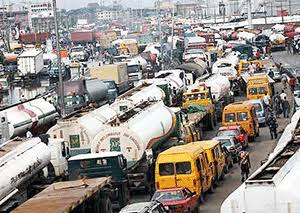
In an extensive interview with Arise News on Thursday, Othman highlighted that despite government interventions yielding marginal improvements, the Apapa and Tin Can port corridors remained plagued by structural and operational shortcomings.
These, he said, exacerbated cargo turnaround times and increase the cost of doing business in Nigeria.
“No doubt about it, all those items you enumerated, the problems subsist,” Othman said, noting the persistence of multiple checkpoints by non-state actors, favouritism, and inefficiencies in the electronic call-up system (e-call-off) managed by the Nigerian Ports Authority (NPA).
“Somebody can just get a ticket directly from the system without necessarily going through what was agreed in the operations,” he added.
Othman acknowledged incremental improvements in port organization compared to previous years but emphasized that much more is needed to guarantee smooth evacuation of cargo.
He also raised concerns over the ageing fleet of trucks operating at the ports, which he said contributes to frequent road accidents.
He commended Lagos State Government’s decision to introduce 2,000 Compressed Natural Gas (CNG) trucks into the logistics system.
He described it as a bold initiative that could reduce accidents, improve operations, and lower transportation costs.
He also praised President Bola Tinubu’s national CNG programme, noting that NARTO has already benefited from the provision of 20 CNG buses and that the scheme has helped reduce transportation costs by more than 30 per cent.
Responding to criticisms that transport unions exacerbate congestion and operational chaos, Othman argued that the majority of operators adhere to established procedures and are committed to improving efficiency.
He stressed that collaboration among port authorities, transport unions, law enforcement, and Lagos State agencies was crucial to addressing the systemic issues.
Regarding decentralisation and the movement of port operations to other locations such as Warri, Onne, Calabar, and Lekki, Othman said NARTO does not oppose such moves but called for governance that prioritised regulation rather than direct government control of business operations.
“The government has no business of business.
“We are concerned and we want an improved operation system.
”If all stakeholders work jointly, we can address these challenges and ensure a smoother, safer, and more efficient transport system, ” he said.
Othman emphasised that meaningful reforms at Lagos ports would require sustained collaboration, accountability, and enforcement of operational standards to protect both transport operators and the broader logistics sector.