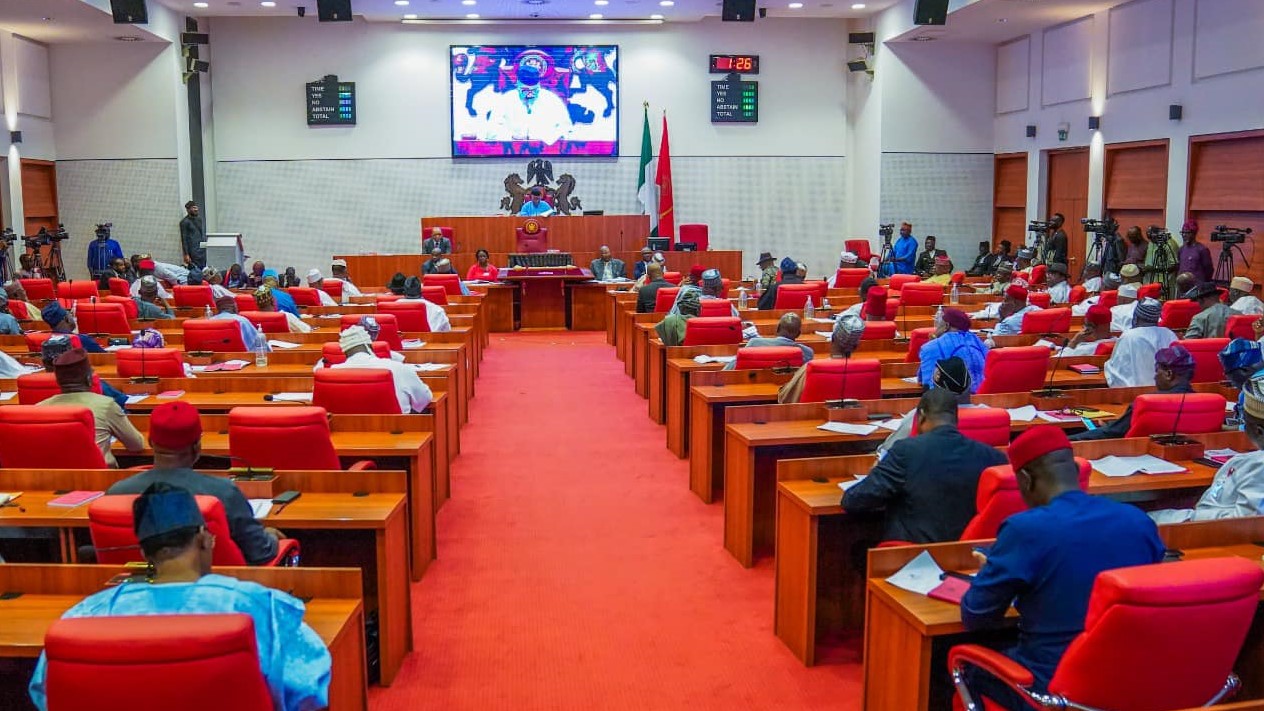
The Nigerian Senate has intensified scrutiny of the Central Bank of Nigeria (CBN), pressing the apex bank to provide a comprehensive explanation for the alleged non-remittance of N1.44 trillion from its operating surplus.
The development comes as the CBN reports a period of relative economic stability not seen in over a decade.
At a briefing convened by the Senate Committee on Banking, Insurance, and other Financial Institutions, chaired by Senator Tokunbo Abiru, lawmakers emphasised the importance of accountability.
“The public has a right to understand how funds generated by the CBN are managed. Transparency is essential to maintain trust in our financial institutions,” Abiru said, insisting on a clear and documented response from the bank.
CBN Governor Olayemi Cardoso addressed the committee, highlighting the country’s improved economic indicators.
He noted that headline inflation had dropped steadily from 34.6% in late 2024 to 16.05 per cent by October 2025, marking the longest period of disinflation in recent history.
Food inflation also slowed, thanks to stabilised supply chains and predictable foreign exchange rates.
Governor Cardoso painted a positive picture of Nigeria’s foreign exchange market, describing a dramatic reduction in the gap between the official and parallel rates—from over 60 per cent a year ago to under two percent today.
He also reported that the naira was trading stronger than it had in the first half of 2025, and that foreign exchange backlogs totaling $7 billion had been fully cleared.
External reserves, he added, have surged to $46.7 billion, enough to cover more than ten months of imports, while diaspora remittances and foreign capital inflows have risen sharply.
These improvements, according to Cardoso, reflect the success of the CBN’s monetary reforms, liberalization policies, and tighter liquidity management.
Despite these gains, the Senate sought answers on a range of policy decisions, including the rationale for maintaining a 45 per cent Cash Reserve Ratio, the treatment of public-sector deposits, and issues around electronic banking and currency circulation.
The lawmakers also requested updates on inter-agency regulatory coordination to ensure continued stability and public confidence.
The session concluded with a closed-door discussion to allow committee members to deliberate further on the matter.