The political tensions in Rivers State escalated on Friday as the Speaker of the State House of Assembly, Martin Amaewhule, led 16 other lawmakers in a dramatic defection from the Peoples Democratic Party (PDP) to the All Progressives Congress (APC).
The move marks one of the largest single legislative defections in the state’s recent history and further tilts the balance of power in favour of the APC.
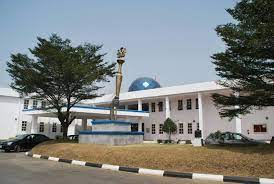
The announcement was made during plenary at the Assembly complex in Port Harcourt on Friday, where the lawmakers declared that prolonged turmoil within the PDP had left them with no choice but to seek a new political platform.
Among the defectors were key figures of the legislature, including Deputy Speaker Dumle Maol, House Leader Major Jack, Linda Stewart, Franklin Nwabochi, Azeru Opara, Smart Adoki, Enemi George, and Solomon Wami. Others included Igwe Aforji, Tekena Wellington, Looloo Opuende, Peter Abbey, Arnold Dennis, Chimezie Nwankwo, Gerald Oforji, and Ofiks Kabang.
Their exit leaves the PDP with only 10 members in the 27-member legislature.
In response, the remaining PDP lawmakers appointed Sylvanus Nwankwo of Omuma Constituency as the new Minority Leader.
Amaewhule, who represents Obio-Akpor I, read his defection letter before the House, stating that he had already notified his ward chairman of his departure from the PDP.
He attributed his decision to what he called a “deep and unresolved division” tearing through the party.
The Speaker praised President Bola Tinubu while announcing his new affiliation.
“I am happy to join the APC so we can support Mr President.
“President Tinubu is addressing national security challenges with seriousness, ” he said.
He has shown goodwill to Rivers people, and I am delighted to align with a party that supports his leadership.”
He added that he would complete all formalities required to obtain his APC membership card within days.
During the sitting, House Leader Major Jack also criticised Governor Siminalayi Fubara, accusing him of failing to fully constitute the state’s executive council months after the political crisis erupted.
He said the state was still without an attorney general.
Rivers State, a PDP stronghold since the return of civil rule in 1999, has been engulfed in crisis for more than a year.
The rift widened drastically following a bitter fall-out between Governor Fubara and his predecessor, Nyesom Wike, now Minister of the Federal Capital Territory.
The conflict triggered a series of dramatic events, including the partial demolition of the Assembly complex and an attempted impeachment of Fubara by legislators aligned with Wike.
The crisis eventually prompted President Tinubu to declare a state of emergency in March.
Both the governor, his deputy, and the Assembly members were suspended from office, while retired Vice Admiral Ibok Ete was appointed as administrator.
When the emergency rule expired in September, Tinubu reinstated all political actors, urging them to restore stability.
However, the PDP’s internal ruptures have persisted, with rival national factions emerging since the fallout from the 2023 presidential election.
The defection of Amaewhule’s bloc is widely viewed as the latest sign that reconciliation within the party remains elusive.
As political observers digest the latest developments, the mass movement to the APC is expected to have significant implications for governance in Rivers State and may further reshape political alignments ahead of the next electoral cycle.