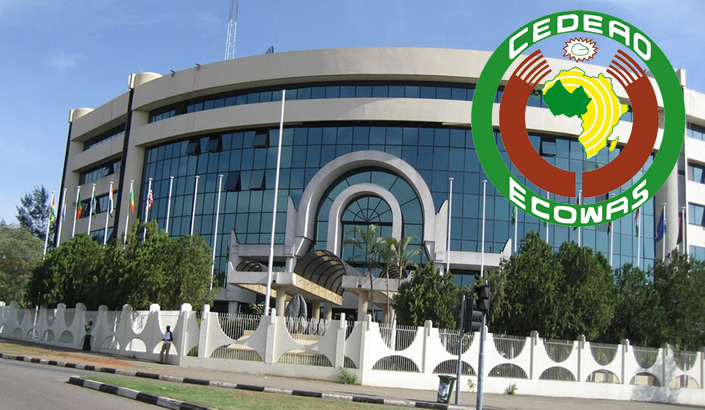
Dr. Omar Touray, President of the Economic Community of West African States (ECOWAS), has urged member states to significantly increase investment in security as the region grapples with rising military threats, political instability, and states of emergency.
Touray made the call on Tuesday during the 55th Ordinary Session of the ECOWAS Mediation and Security Council at ministerial level in Abuja.
Highlighting recent military incursions, humanitarian crises, and emergency declarations in several member states, he stressed the urgency of strengthening regional security frameworks.
“The events of the last few weeks have shown the imperative of serious introspection on the future of our democracy and the urgent need to invest in the security of our community,” Touray said.
He commended ECOWAS’s rapid intervention in Benin, led by Nigeria, describing it as “rapid, flexible, and responsive” to citizens’ needs.
Touray also praised the responses of Nigerian President Bola Tinubu, Ghanaian President John Mahama, and other regional leaders, emphasizing the need for consistent collaboration to defend democracy.
Touray warned that West Africa continues to face medium to high security risks driven by terrorism, armed groups, criminal networks, erosion of electoral credibility, and geopolitical pressures.
He noted that elections remain a key trigger for instability, despite ECOWAS’s ongoing efforts to support constitutional convergence and electoral processes.
The council pledged to closely monitor political and security developments ahead of 2026 elections in Guinea, Benin, The Gambia, and Cape Verde, while addressing ongoing crises in Guinea-Bissau and Benin.
Priority areas include ensuring credible political transitions, countering terrorism and organized crime, and maintaining ECOWAS unity amid geopolitical challenges.
Touray highlighted the impact of instability on vulnerable populations, particularly women and children.
According to UNHCR data, by October 2025, 7.6 million people had been forcibly displaced across the region, including 6.5 million internally displaced persons in Nigeria, Burkina Faso, Niger, and Mali, as well as one million refugees and asylum seekers mainly hosted in Niger, Mali, Nigeria, and Côte d’Ivoire.
“We must take decisions and actions that will reverse this trend,” Touray urged, calling for concrete measures to stabilise communities and protect civilians.
Sierra Leone’s Foreign Affairs Minister, Timothy Kabba, reaffirmed his country’s commitment to peace, stability, and democratic governance, describing the meeting as timely given recent coups and attempted coups in the region.
“ECOWAS cannot and will not accept actions that undermine democratic values or threaten citizens’ peace,” Kabba stated.
The session concluded with calls for sustained collaboration among member states, emphasising that regional security investment was critical not only to safeguarding democracy but also to ensuring the welfare of millions of displaced and vulnerable citizens across West Africa.