ECOWAS warns of sanctions as Guinea-Bissau faces pressure to restore civilian rule

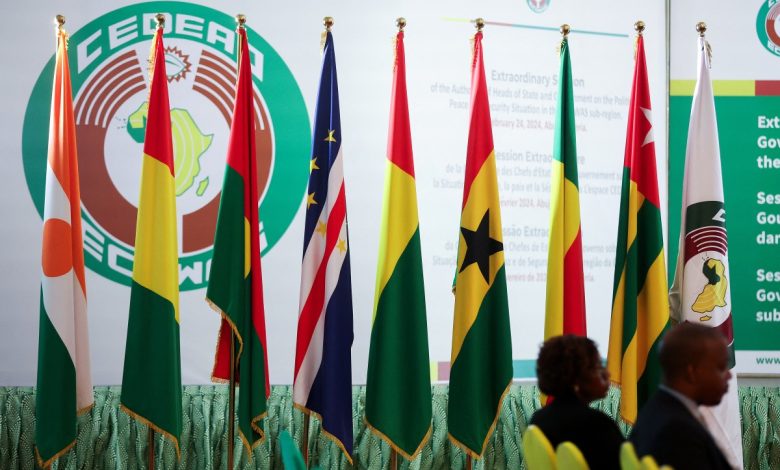
The Economic Community of West African States (ECOWAS) has issued a stern warning to political and military actors in Guinea-Bissau, threatening the imposition of targeted sanctions against anyone undermining efforts to restore democratic governance after last month’s military takeover.
The warning was delivered at the conclusion of the bloc’s 68th Ordinary Session of the Authority of Heads of State and Government, held on Sunday in Abuja, Nigeria.
The high-level meeting brought together presidents and senior officials from across West Africa amid growing concern over renewed instability in the region.
Speaking to journalists after the summit, ECOWAS Commission President Omar Alieu Touray said the regional body would not tolerate any actions that derail the country’s transition back to constitutional order.
According to him, individuals or groups found obstructing the transition process would face punitive measures carefully tailored to hold them accountable.
Touray further disclosed that the ECOWAS standby force, which has been deployed in Guinea-Bissau since 2022, has been granted expanded authority.
He said the force, is now mandated to protect political leaders and safeguard national institutions as the country navigates a fragile post-coup environment.
The situation in Guinea-Bissau was one of the dominant issues at the Abuja summit, alongside a recent but unsuccessful coup attempt in Benin. ECOWAS leaders strongly condemned both incidents, describing them as serious threats to regional stability and democratic norms.
In response to the attempted overthrow in Benin, Nigeria swiftly deployed fighter jets and ground troops in collaboration with forces from Côte d’Ivoire to reinforce the elected government.
ECOWAS has since confirmed that additional troops from Ghana and Sierra Leone are expected to bolster security efforts.
The latest developments have reignited fears of a resurgence of military takeovers in West Africa.
Between 2020 and 2023, several ECOWAS member states — including Burkina Faso, Guinea, Mali and Niger — experienced successful coups.
All four countries remain under military rule and have since been suspended from the regional bloc.
Although the Abuja meeting was planned before the most recent coup attempts, discussions were heavily shaped by unfolding political crises.
Leaders also reviewed preparations for Guinea’s general elections scheduled for December 28.
The polls have drawn controversy after junta leader Mamady Doumbouya entered the race despite earlier assurances that he would not seek office.
Also, former prime minister and prominent opposition figure Cellou Dalein Diallo, currently living in exile, has been barred from contesting.
Despite these concerns, Touray described the electoral process as an important step forward in Guinea’s transition.
He expressed cautious optimism that the vote would be credible, transparent and fair, though he acknowledged lingering doubts among observers.
Beyond electoral politics, the summit devoted significant attention to worsening security conditions in the Sahel.
Jihadist violence continued to escalate in Burkina Faso, Mali and Niger, countries now ruled by military juntas that have withdrawn from ECOWAS to form the Alliance of Sahel States (AES).
Last week, Touray called for renewed dialogue with the AES, emphasizing the need for cooperation in addressing cross-border security threats.
Echoing this sentiment, Sierra Leonean President Julius Maada Bio, the current ECOWAS chair, warned that no country in the region is immune from the spread of violence.
Notably absent from the summit were the leaders of Guinea and Guinea-Bissau, both suspended from ECOWAS following their respective military takeovers.
Nigeria’s President Bola Tinubu also did not attend, delegating representation to Vice President Kashim Shettima.
In addition to military interventions, ECOWAS leaders acknowledged growing concerns about democratic erosion even in civilian-led states.
Recent elections in Côte d’Ivoire, which returned President Alassane Ouattara for a fourth term amid the exclusion of opposition challengers, were cited as an example of troubling political trends.
As West Africa grapples with coups, contested elections and rising insecurity, ECOWAS faces mounting pressure to balance diplomacy, enforcement and regional solidarity in its effort to preserve democratic governance across the subregion.