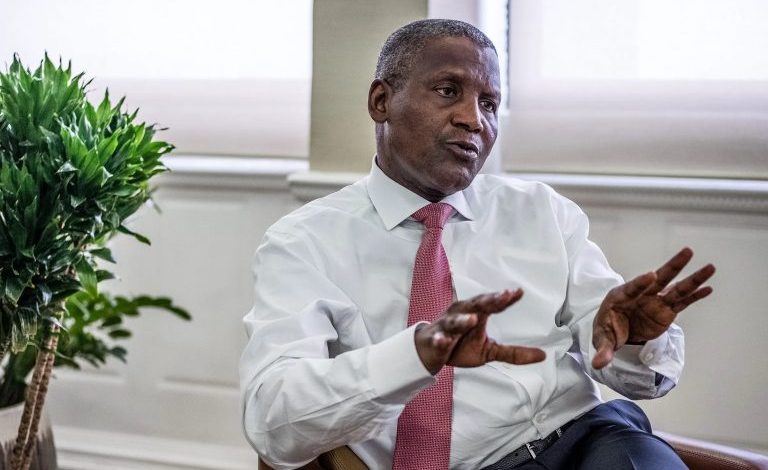
The House of Representatives Joint Committee on Petroleum Resources (Downstream and Midstream) has stepped in to address the escalating dispute between the Dangote Petroleum Refinery and the Nigerian Midstream and Downstream Petroleum Regulatory Authority (NMDPRA), amid fears that the disagreement could destabilise Nigeria’s downstream petroleum sector.
The joint committee, chaired by Hon. Ikenga Imo Ugochinyere and Hon. Henry Okogie, announced its intervention following an emergency meeting convened in response to rising public concern over allegations and counter-allegations exchanged between the two sides.
The lawmakers described the situation as potentially harmful to the fragile stability recently achieved in the sector, especially in the post-fuel subsidy era.
At the end of the meeting, the committee resolved to summon the President of the Dangote Group, Alhaji Aliko Dangote, alongside the leadership of the NMDPRA, to appear before it and formally present their grievances.
The lawmakers said the hearing would be conducted urgently and concluded within days to ensure a speedy resolution of the dispute.
Speaking after the meeting, Hon. Ugochinyere said the committee was compelled to act swiftly to prevent further escalation, stressing that the petroleum sector remained too critical to the nation’s economy to be exposed to prolonged instability.
He noted that government and industry stakeholders were currently working to stabilise fuel supply, pricing and regulatory processes, efforts which could be undermined by continued public confrontations.
According to him, the core objective of the legislative intervention is to clearly identify the issues fueling the disagreement so that lasting solutions can be crafted without bias.
He explained that only by hearing directly from all parties involved would the National Assembly be able to take informed decisions in the national interest.
As part of its immediate measures, the committee directed both the Dangote Group and the NMDPRA to suspend all media engagements, public accusations and counter-statements while the investigation is ongoing.
The lawmakers appealed for restraint, warning that continued public exchanges could worsen tensions and erode confidence in the sector.
Ugochinyere assured that the committee has the authority and capacity to resolve the matter conclusively.
He disclosed that the panel has already received petitions touching on broader industry concerns, including the issuance of import licences and questions surrounding the ability of local refineries to meet Nigeria’s daily petroleum demand.
He said these issues would form part of the committee’s deliberations when stakeholders appear before it.
He added that the outcome of the engagement would provide clarity on regulatory practices, domestic refining capacity and other contentious matters affecting the downstream industry.
Reiterating the committee’s position, Ugochinyere urged all parties to exercise restraint and allow the House to carry out its oversight responsibilities.
He said the resolutions announced reflected a unanimous decision by committee members, who are determined to safeguard stability in the downstream petroleum sector and protect the broader national interest.
The House intervention comes against the backdrop of heightened scrutiny of Nigeria’s petroleum sector, where expectations remain high over local refining, regulatory transparency and steady fuel supply.
The situation gained further attention after Aliko Dangote publicly accused the Chief Executive Officer of the NMDPRA, Farouk Ahmed, of corruption.
Dangote, speaking during a media briefing at the Dangote Petroleum Refinery and Fertiliser Plant in Lekki, Lagos, alleged that the NMDPRA boss spent about $5 million on secondary school education for his children in Switzerland.
He described the alleged expenditure as inconsistent with the income of a public servant and warned that such claims, if left unaddressed, could erode public trust in regulatory institutions.
The businessman argued that the cost, which he said covered several years of schooling for four children, raised serious questions about accountability in public office.
As of the time of the committee’s intervention, the NMDPRA had not issued an official response to the allegations.