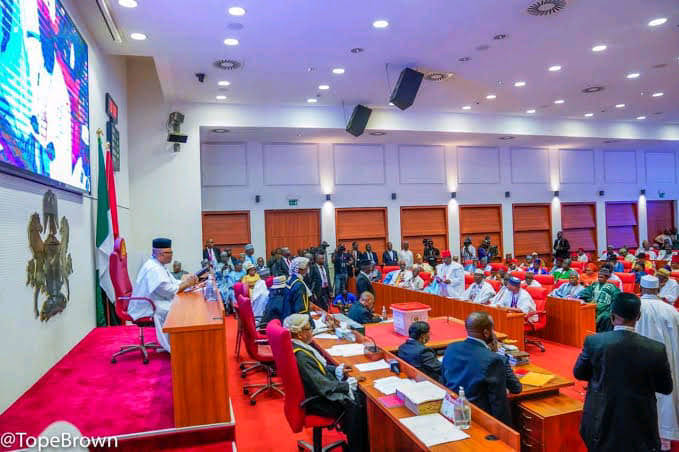
The Nigerian Senate on called for the establishment of a fully electronic and integrated civil registration system to enhance national planning and governance.
The proposal was highlighted during a public hearing organised by the Senate Committee on National Identity Card and National Population.
The discussion focused on a new bill aimed at replacing the outdated 2004 Births and Deaths (Compulsory Registration) Act with the Compulsory Civil Registration 2025.
The legislation seeks to modernise the registration of births, deaths, marriages, and other civil events through a nationwide digital platform.
Senator Victor Umeh, the bill’s sponsor, stressed that transitioning from paper-based records to an integrated electronic system is essential for accurate population data, effective policy-making, and transparent governance.
“For Nigeria to compete globally and plan efficiently, we need a system that ensures every birth and death is properly recorded, regardless of location or social status,” he said.
The hearing brought together experts, stakeholders, and sector representatives to provide input that would help shape a law aligned with international best practices.
Umeh noted that Nigeria has long relied on fragmented records and population estimates, which undermines planning in education, healthcare, and national security.
The proposed system would also link various institutions, including the National Identity Management Commission (NIMC), National Population Commission (NPC), Immigration, Federal Road Safety Corps (FRSC), and health agencies, to ensure seamless data sharing and integration.
Senate President Godswill Akpabio, represented by Deputy Chief Whip Senator Peter Nwebonyi, highlighted the critical role of reliable civil registration in governance.
“Accurate vital statistics form the backbone of national planning, resource allocation, and legal identity for every citizen,” he said.
Aminu Yusuf, Chairman of the National Population Commission, supported the reforms, noting that digital integration would address long-standing gaps in the implementation of civil registration laws.
The Christian Association of Nigeria (CAN), through Archbishop Daniel Okoh, also backed the bill, suggesting minor wording changes to ensure clarity in defining religious officials responsible for registration.
The hearing marks a significant step toward creating a modern, efficient, and inclusive civil registration system capable of supporting Nigeria’s development goals in the digital age.