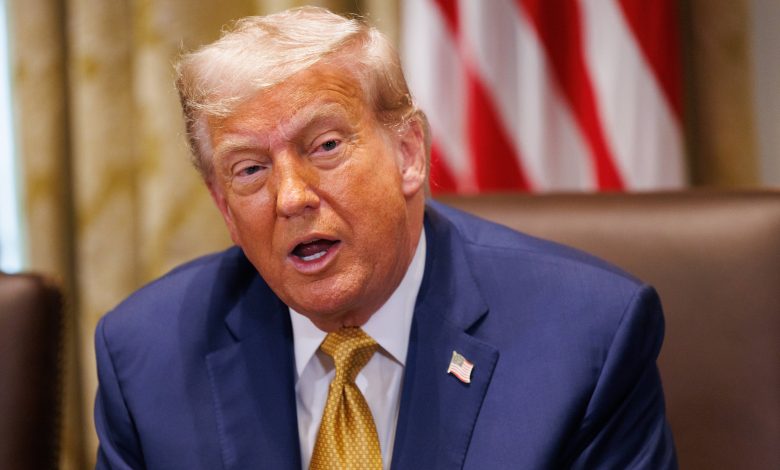
United States President Donald Trump has widened the scope of his administration’s controversial travel restrictions, imposing a full entry ban on citizens of seven additional countries, including Syria, while also extending restrictions to holders of Palestinian Authority passports.
The new measures, announced on Tuesday through a White House proclamation, are part of what the administration describes as efforts to strengthen national security and protect American interests.
According to the White House, the decision targets foreign nationals deemed likely to pose security risks or undermine the country’s institutions, governance, and cultural foundations.
The latest action followed a deadly incident in Syria in which two American soldiers and a civilian were killed.
Although the Trump administration has recently sought to re-engage Syria diplomatically after the fall of longtime leader Bashar al-Assad, the attack has heightened security concerns.
Syrian officials said the suspect was a member of the country’s security forces who was about to be dismissed over alleged extremist views.
In addition to Syria, the newly blacklisted countries under the full travel ban include Burkina Faso, Mali, Niger, Sierra Leone, South Sudan, and Laos.
The policy also formally bars Palestinian Authority passport holders, a move that aligns with Washington’s continued support for Israel amid growing international recognition of Palestinian statehood by countries such as France and the United Kingdom.
Beyond the full bans, the White House announced partial travel restrictions on citizens of several other countries, notably Nigeria, Africa’s most populous nation, alongside Angola, Benin, Senegal, Tanzania, Zambia, Zimbabwe, and a number of Caribbean states.
These partial restrictions are expected to affect visa categories and entry conditions rather than impose outright bans.
President Trump has in recent weeks adopted a harsher tone on immigration, particularly concerning migrants from Africa and other developing regions.
His remarks at campaign rallies and public events have drawn criticism from civil rights groups and foreign governments, who accuse the administration of discriminatory rhetoric and policies.
The United States already maintains a list of countries subject to full travel bans, including Afghanistan, Iran, Libya, Sudan, Yemen, Haiti, and several others.
Last month, the administration further tightened restrictions on Afghan nationals, ending special visa pathways for some individuals who had assisted U.S. forces, following a shooting incident involving an Afghan national in Washington.
The White House defended the expanded ban by citing concerns over crime rates in certain countries and what it described as weaknesses in passport control and identity verification systems.
It also acknowledged that one previously restricted country, Turkmenistan, had made “significant progress” and would now be eligible for limited non-immigrant visas.
The latest expansion of the travel ban is expected to provoke renewed international backlash and legal scrutiny, as critics argue that the policy risks straining diplomatic relations and unfairly targeting some of the world’s poorest and most vulnerable populations.