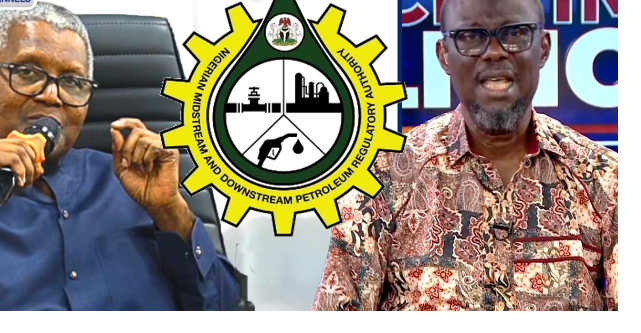
The Petroleum Products Retail Outlet Owners Association of Nigeria (PETROAN) has provided clarity on its position regarding the recent sharp reduction in petrol prices announced by the Dangote Refinery.
It stressed that the association was not against lower fuel costs but is concerned about the financial impact on its members.
The controversy followed Dangote Refinery’s decision to reduce the gantry price of Premium Motor Spirit (PMS) from N828 to N699 per litre, coupled with plans to enforce a nationwide pump price of about N739 per litre.
The price cut, announced ahead of the festive season, was described by Alhaji Aliko Dangote as a measure to ease the financial burden on Nigerians, particularly during the holiday period.
Dangote also warned that marketers who retained higher pump prices despite the reduction would undermine his efforts.
Reports emerged soon after that PETROAN had opposed the move, prompting criticism from the public.
Speaking on Channels Television on Wednesday, PETROAN President Billy Gillis-Harry clarified that the association welcomed reductions in principle but was concerned about the sudden implementation.
He explained that many retail outlet owners had recently purchased large volumes of petrol at higher prices, only to face an abrupt market price drop.
“Many of our members bought petrol in bulk just days ago.
“Before they could even sell a litre, the price dropped by approximately N129 per litre.
”Considering that some trucks carry over 100 metric tonnes, these sudden changes can translate into losses amounting to billions of naira,” he said.
He emphasised that PETROAN’s position is not to resist Dangote or discourage lower fuel prices, but to advocate for better coordination in a deregulated market.
According to him, price adjustments that are not linked to clear market indices can destabilize operations, and prior notice would allow marketers to plan purchases and mitigate financial losses.
Addressing concerns over monopoly in the downstream sector, Gillis-Harry noted the importance of having multiple sources of petrol supply, including imports, to prevent overdependence on a single supplier.
He argued that a diverse supply chain is crucial to maintaining stability and competitiveness in the market.
On claims regarding substandard fuel in Nigeria, the PETROAN president acknowledged that such challenges existed in the past but stated that they have largely been addressed.
He highlighted the role of the Nigerian Midstream and Downstream Petroleum Regulatory Authority (NMDPRA) in monitoring product quality and certifying products before release, describing accusations of poor-quality fuel as unnecessary and distracting.
Gillis-Harry urged all stakeholders in the downstream sector to focus on ensuring steady supply and fair pricing for consumers, warning that continuous public confrontations and sudden policy changes could harm both operators and the Nigerian public.