2026 Budget: Delta Govt. channels bulk of funds to infrastructure, social welfare

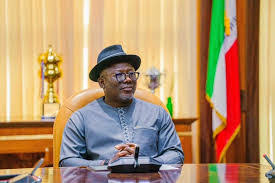
The Delta Government has rolled out plans for its 2026 Appropriation Law with a total spending plan of about N1.7 trillion.
The budget is made up of N500 billion for Recurrent Expenditure, and N1.229 trillion was for Capital Expenditure.
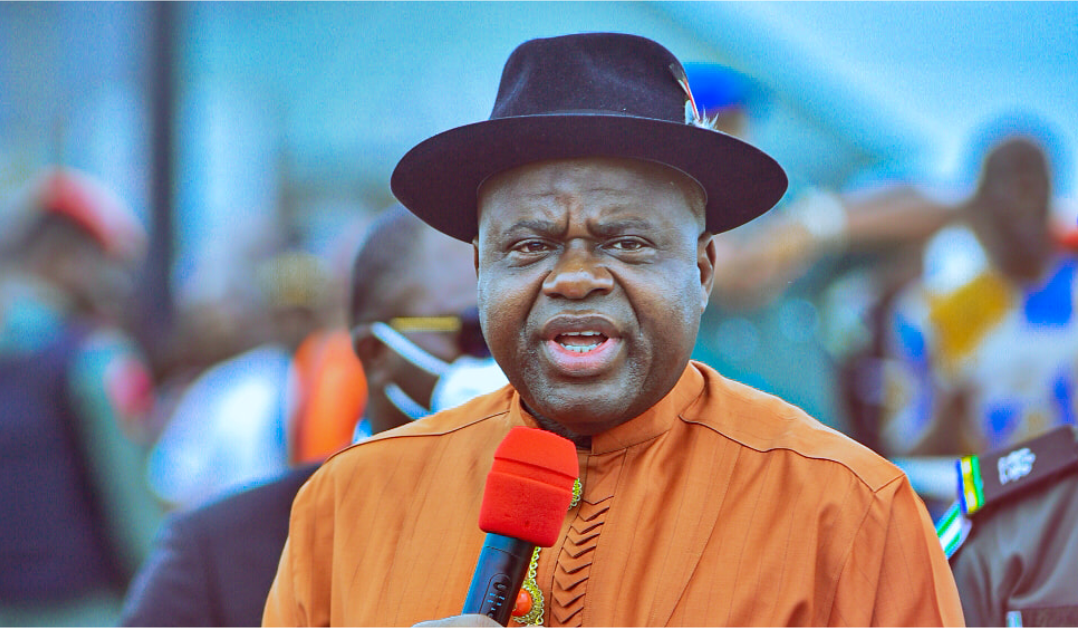
Detail of the budget were made public in Asaba on Wednesday during a press briefing by the State Commissioner for Economic Planning, Mr Sunny Ekedayen.
Ekedayen explained that the spending framework, recently approved by the State House of Assembly and signed into law by Gov. Sheriff Oborevwori, represented a significant increase over the 2025 budget of N979 billion.
According to Ekedayen, the initial proposal of N1.664 trillion submitted to lawmakers underwent scrutiny and adjustments during the legislative process, resulting in a final figure that better reflects the developmental priorities of the state.
He confirmed that the budget would come into force on January 1, 2026.
A major highlight of the 2026 fiscal plan is the emphasis on capital expenditure.
Ekedayen disclosed that more than N1.165 trillion, over 70 per cent of the total budget has been earmarked for capital projects, a departure from previous spending patterns.
He described the allocation as unprecedented, noting that the capital component alone exceeded the entire 2025 budget.
According to him, this shift is designed to fast-track development across Delta State’s 25 local government areas through improved infrastructure and public facilities.
The commissioner said the administration intended to commence implementation immediately in the new year.
Ekedayen stressed that existing projects would be completed while new ones would be carefully selected to deliver measurable benefits.
He added that contractors typically receive up to 40 per cent mobilisation to ensure prompt execution, especially in view of the state’s limited construction window.
Ekedayen was accompanied at the briefing by the Commissioner for Works (Rural Roads) and Public Information, Mr Charles Aniagwu; the Executive Assistant to the Governor on Public Enlightenment, Projects and Policies, Mr. Olisa Ifeajika and others.
He also said that social welfare is also expected to feature prominently in 2026, with about N20 billion set aside for programmes targeting artisans, small traders, vulnerable citizens among others.
The commissioner said that the support, would be delivered through a mix of cash transfers and material assistance.
Ekedayen said to sustain the initiative, a Social Protection Bill has been forwarded to the State Assembly to provide a legal and institutional framework for its operation.
On infrastructure delivery, Ekedayen emphasised that development would be spread across both urban and rural communities, reflecting the State’s dispersed settlement structure.
He also announced that N100 billion has been reserved for special interventions at the local government level to address pressing community needs identified through grassroots engagement.
In the health sector, the commissioner revealed plans for major upgrades to tertiary healthcare facilities, including the acquisition of advanced diagnostic equipment from Germany for three state-owned hospitals.
He also spoke of ongoing efforts to strengthen primary healthcare, expand medical training programmes, recruit more health workers and sustain the state’s health insurance scheme.
Ekedayen said, education remained a core focus of the present administration.
He added that there would be continuous funding for state universities, polytechnics, colleges of education, schools of nursing and health technology, as well as numerous primary and secondary schools.
Ekedayen noted that improvements in facilities and learning conditions were positioning Delta as an emerging centre for educational excellence.
Agriculture is another key pillar of the 2026 budget, with plans anchored on direct government investment, partnerships with the private sector and large-scale agribusiness ventures.
He said these measures were aimed at boosting food production, creating employment opportunities and minimising post-harvest losses.
He added that the state is well placed to benefit from the second phase of the Federal Government’s Special Agro-Industrial Processing Zones programme.
On the revenue side, Ekedayen reported a sharp rise in Internally Generated Revenue, which has grown by more than 140 per cent since 2023—from N83 billion to over N200 billion.
He said the target for the coming year is at least N250 billion, attributing the growth to improved efficiency and reforms rather than additional tax pressure on residents.
He disclosed that the state was exploring new revenue streams, including participation in the blue carbon market through mangrove restoration and climate finance initiatives, in collaboration with international partners and the Federal Government.
Ekedayen described Gov. Oborevwori as a results-driven leader focused on long-term impact, assuring residents that the benefits of governance would be felt across all communities.
“As from January 1, 2026, the machinery of government will be fully activated.
”Development efforts will intensify, projects will advance, and communities across Delta State will experience visible progress,” he said.