2026 Budget: Obi alleges manipulation of laws, warns of threat to constitutional order

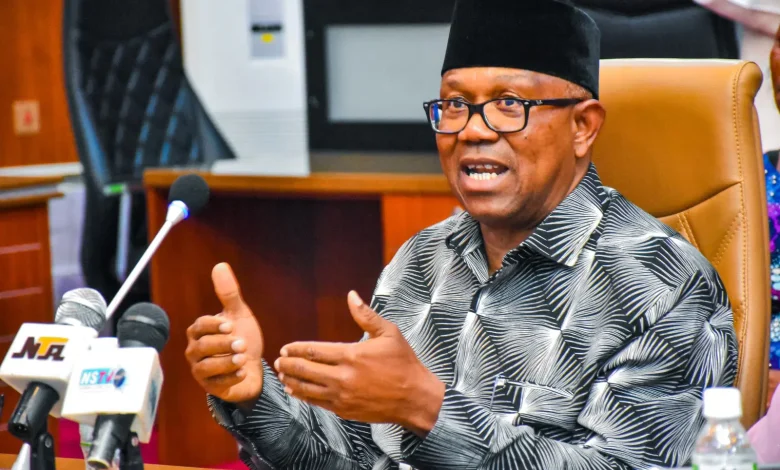
Former presidential candidate of the Labour Party, Peter Obi, has accused the Federal Government of presiding over what he described as the fabrication of laws, raising serious concerns about transparency and constitutional governance in the wake of the presentation of the 2026 national budget.
Obi made the allegation in a statement published on Saturday via his official X (formerly Twitter) account, titled “Migrating from Padded Budgets to Forged Laws.”
In the statement, he expressed alarm over what he claimed were inconsistencies between bills passed by the National Assembly and the versions later published and enforced by the executive arm of government.
President Bola Tinubu had on Friday presented the 2026 budget proposal to a joint sitting of the National Assembly.
According to the President, the budget provides for a capital expenditure of N26.08 trillion, with total projected revenue estimated at N34.33 trillion.
Debt servicing was put at N15.52 trillion, while the proposed budget deficit stands at N23.85 trillion, representing about 4.28 per cent of the nation’s Gross Domestic Product.
The proposal was based on key economic assumptions, including crude oil production of 1.84 million barrels per day, a benchmark oil price of $64.85 per barrel, and an exchange rate of N1,400 to the U.S. dollar for the 2026 fiscal year.
Reacting to the development, Obi argued that beyond the figures presented, a deeper issue had emerged concerning the integrity of Nigeria’s law-making process.
He alleged that laws passed by the legislature had been altered before implementation, describing the situation as a dangerous shift from past controversies over padded budgets to what he called “forged laws.”
According to Obi, the alleged discrepancies are not minor administrative errors but fundamental breaches that undermine the rule of law.
He claimed that certain provisions currently being enforced were never approved by the House of Representatives, particularly clauses that introduce new enforcement and coercive powers.
Among the areas of concern highlighted by the former Anambra State governor were requirements for a compulsory 20 per cent deposit before tax-related appeals can be heard in court, the sale of assets without judicial approval, and the granting of arrest powers to tax authorities.
Obi warned that such measures threatened taxpayers’ rights and restrict access to justice.
He also criticised what he described as the silence of the Presidency on allegations of forgery and institutional abuse, questioning who authorised the changes and why the matter has not been openly addressed.
Obi stressed the need for full disclosure, insisting that Nigerians deserve clarity on what the National Assembly passed, what the President signed, and what was eventually recorded as law.
The former presidential candidate cautioned that public confidence in governance would continue to erode if citizens were asked to bear heavier tax burdens in an environment where trust in institutions is declining.
He called for leadership anchored on due process, transparency, accountability, and respect for constitutional principles.
Obi noted that no country could make sustainable progress where laws were manipulated and allegations of wrongdoing were met with silence rather than decisive leadership.