Oil importation racket collapsing, says Kunle, as Tinubu overhauls petroleum regulators

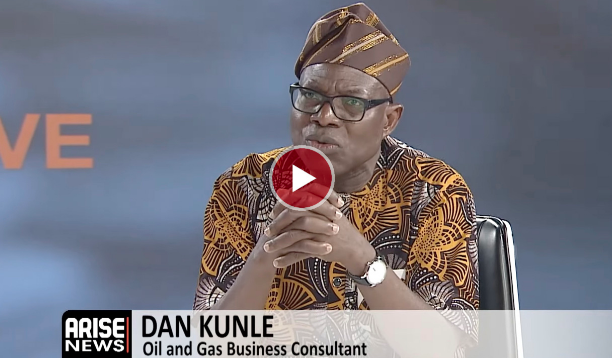
Oil and gas consultant, Mr. Dan Kunle, has described the recent removal of senior petroleum sector regulators as a decisive break from what he termed Nigeria’s long-entrenched and fraudulent oil importation system.
He commended President Bola Tinubu for what he called a rare show of political courage in confronting vested interests in the industry.
Kunle made the remarks on Sunday during an interview on Arise News, where he reacted to the exit of the Chief Executive of the Nigerian Midstream and Downstream Petroleum Regulatory Authority (NMDPRA), Farouk Ahmed, as well as leadership changes at the Nigerian Upstream Petroleum Regulatory Commission (NUPRC).
He said the shake-up, which followed allegations raised by the President of Dangote Group, Alhaji Aliko Dangote, had been long anticipated.
Responding to a question on whether Dangote’s petition triggered the removals, Kunle answered in the affirmative, noting that the situation had reached a point where decisive action was unavoidable.
According to him, recent events merely accelerated an outcome that had been building up over time.
He described the oil and gas sector as Nigeria’s economic backbone and said decisive reform was overdue.
Kunle praised President Tinubu for taking responsibility and exercising the political will required to dismantle structures that, in his view, had benefited a narrow cartel for decades at the expense of the country.
Kunle argued that the former leadership of the midstream and downstream regulatory agency lacked the institutional capacity to oversee a facility of the scale and complexity of the Dangote Refinery.
He said the regulator neither possessed the technical expertise nor the regulatory framework required to effectively supervise such a massive operation, making confrontation inevitable.
According to him, the current overhaul confirms predictions he made weeks earlier, adding that the changes signalled that a fundamental transformation of the oil and gas sector was underway.
He maintained that reforms introduced under Tinubu’s administration in the last two and a half years had set the stage for a lasting revolution in the industry.
Kunle further declared that the dismantling of the regulatory leadership marked the collapse of what he described as a rent-seeking order that had dominated Nigeria’s petroleum value chain for decades.
He said the interests that thrived under the old system had effectively been cut off, insisting that the era of easy profits from importation rackets was over.
On the removal of the former NUPRC chief, Mr. Gbenga Komolafe, Kunle acknowledged his efforts to reform the upstream sector but said he became a casualty of a broader political reset.
He noted that Komolafe had inherited a difficult system and had made progress in the last year, including conducting a modest offshore bid round that achieved significant success and laying the groundwork for the auction of additional oil blocks.
However, Kunle said the President faced a delicate situation, as both Komolafe and Farouk Ahmed emerged from the same power structure, making sweeping changes inevitable under the new reform agenda.
Turning to allegations of corruption linked to fuel importation, Kunle described Nigeria’s import-dependent system as deliberately engineered over several decades to undermine domestic refining.
He alleged that successive regulatory and operational frameworks—from the defunct Petroleum Products Pricing Regulatory Agency (PPPRA) to the current NMDPRA—enabled powerful interests to sabotage local refineries and profit massively from imports.
He claimed that these practices had inflicted enormous financial losses on the Dangote Refinery, estimating losses of over N1 trillion within the last 18 months.
Kunle argued that those now complaining about lost revenue had benefited disproportionately from abnormal profits over the past three decades.
Defending Dangote against accusations of using influence to intimidate regulators, Kunle insisted the billionaire businessman respected institutions and due process.
He said Dangote would willingly cooperate with any legitimate anti-corruption investigation, stressing that the refinery represents an investment of national importance.
Kunle also criticised Nigeria’s budgetary practices, describing them as disorderly and lacking coherence.
He questioned the rationale behind overlapping fiscal years and argued that the January-to-December budget cycle was merely a convention rather than a legal requirement.
He suggested that alternative fiscal timelines could improve planning and discipline.
He further faulted what he described as overly optimistic assumptions in oil production and pricing benchmarks, advocating a more conservative approach to budgeting based on lower output and crude price estimates.
On tax reforms, Kunle acknowledged the importance of recent initiatives but raised concerns about discrepancies between legislation passed by lawmakers and what was eventually gazetted.
He warned that such inconsistencies could undermine public confidence and damage Nigeria’s credibility.
Kunle said Nigeria had reached a critical turning point, insisting that the culture of rent-seeking must be completely dismantled.
According to him, the country must rebuild its economy on transparent and productive foundations, adding that there should be no reversal of the current reform drive.