Tinubu’s reforms delivering results, Nigeria entering recovery phase — information minister

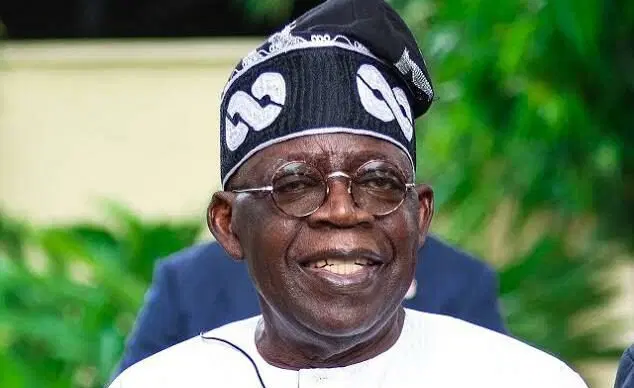
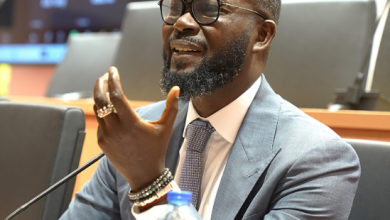
The Minister of Information and National Orientation, Mohammed Idris, has said Nigeria is steadily emerging from years of economic pressure and security challenges, asserting that the policy reforms introduced by President Bola Ahmed Tinubu’s administration are producing tangible results across critical sectors of the economy.
Speaking on Monday at the Federal Government’s end-of-year press briefing, Idris described 2025 as a turning point for national recovery, while projecting 2026 as a year focused on consolidation, stability, and inclusive prosperity.
Addressing journalists on behalf of the President, the minister said the administration remained committed to transparency and accountability in governance.
He noted that the briefing was aimed at reviewing the outgoing year, accounting for public trust, and outlining the government’s priorities for the year ahead.
Idris opened the briefing with what he described as a major security breakthrough: the successful rescue of all remaining abducted pupils and teachers from St. Mary’s Catholic School in Paikoro, Niger State.
According to him, 130 victims were rescued in the final operation, bringing the total number of freed pupils and teachers to 230, with none left in captivity.
He added that other victims abducted from churches and various locations had also been reunited with their families.
The minister assured Nigerians that President Tinubu had directed security agencies to prevent a recurrence of such incidents and to ensure swift and transparent responses whenever security breaches occur.
He expressed the Federal Government’s sympathy to affected families, particularly during the festive season, and wished them peace and emotional healing.
Reviewing the country’s economic performance, Idris said Nigeria recorded measurable progress in 2025, driven largely by growth in the non-oil sector.
He disclosed that Gross Domestic Product (GDP) grew by 3.98 per cent in the third quarter of the year, reflecting sustained economic expansion.
Inflation, he said, had declined consistently for eight months, falling to 14.45 per cent in November 2025, while food inflation also showed a steady downward trend.
Nigeria’s external reserves, according to the minister, rose to about $44.56 billion, while the country posted a trade surplus of N6.69 trillion in the third quarter of 2025, representing a year-on-year growth of over 27 per cent.
He added that the Purchasing Managers’ Index recorded 12 consecutive months of expansion, signalling growing business confidence.
Idris said global investor confidence in Nigeria had strengthened significantly, pointing to the country’s recent Eurobond issuance, which was oversubscribed by 400 per cent against a $2.3 billion target.
He also announced Nigeria’s exit from the Financial Action Task Force (FATF) grey list, describing it as a major reputational milestone for the financial sector.
“This development restores Nigeria’s credibility globally and enhances our ability to trade, attract investment, and operate seamlessly within the international financial system,” he said.
On energy, the minister revealed that Nigeria achieved a historic milestone in power generation in March 2025, recording its highest-ever daily energy output.
He also highlighted the launch of the Presidential Power Sector Debt Reduction Programme and the recapitalisation of the Bank of Agriculture with N1.5 trillion, describing it as the largest single boost to agricultural financing in recent history.
Idris said the Federal Government committed over N1.5 trillion to road infrastructure in 2025, with emphasis on four major legacy highway projects designed to open new economic corridors.
These include the Lagos–Calabar Coastal Highway, Sokoto–Badagry Superhighway, Trans-Saharan Highway, and the Akwanga–Jos–Bauchi–Gombe Expressway, all being constructed with reinforced concrete for long-term durability.
The minister said youth development remained a central pillar of the administration’s agenda.
He disclosed that the Nigerian Education Loan Fund had provided interest-free loans worth over N150 billion to more than 788,000 students nationwide.
He stressed that President Tinubu was determined to ensure that no Nigerian student is denied access to education due to financial constraints.
Other youth-focused initiatives highlighted included the Student Venture Capital Grant, which offers up to N50 million in equity-free funding, the digital and creative enterprise programme (IDICE), and the 3 Million Technical Talent (3MTT) initiative, aimed at transforming young Nigerians into job creators.
On national security, Idris confirmed that President Tinubu declared a nationwide security emergency in 2025, leading to increased recruitment into the armed forces and police, as well as the deployment of trained forest guards.
He also confirmed the arrest of senior leaders of the Islamic State West Africa Province (ISWAP), including Abu Bara, noting that coordinated intelligence and security operations led to their capture and prosecution.
The minister reiterated the government’s new stance on violent crime, stating that kidnappers and armed groups terrorising communities are now officially classified as terrorists.
Idris said Nigeria’s international profile had improved markedly, citing new diplomatic and economic engagements.
He announced the signing of a $5.18 billion health cooperation agreement with the United States, with Nigeria contributing $3 billion and the US providing $2.18 billion in grants.
He also revealed Nigeria’s return to the International Maritime Organisation (IMO) Council after four decades, as well as the country’s successful bid to host major international events, including CANEX 2026, the Intra-African Trade Fair (IATF) 2027, and the World Public Relations Forum 2026.
Describing the N58.18 trillion 2026 Budget as historic, Idris said it contains the highest-ever capital expenditure of N26.08 trillion and the largest allocation to defence and security at N5.41 trillion.
He added that new tax reform laws scheduled to take effect in 2026 would promote accountability, expand revenue generation, and ensure prudent public spending.
The minister said Nigeria’s recovery trajectory was irreversible, insisting that the short-term hardships of reform were already translating into long-term gains.
“The vision is clear, the strategy is firm, and the resolve is unshakeable,” he said, urging critics to engage with facts rather than sentiment. “Nigeria is truly on the rise.”