Leading government officials in Lagos State have stressed that the success of Nigeria’s ongoing tax reform efforts hinges on strong collaboration between federal, state, and local governments.
This was highlighted during the state’s Tax Reform Summit held on Tuesday under the theme: “The Lagos Implementation Roadmap: From Reforms to Results.”
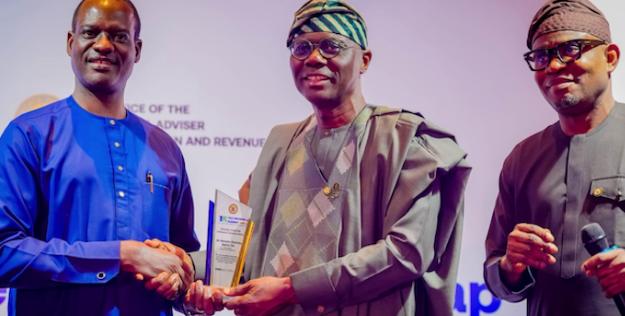
The summit featured key addresses by Mr. Taiwo Oyedele, Chairman of the Presidential Fiscal Policy and Tax Reform Committee, and Mr. Babajide Sanwo-Olu, Governor of Lagos State.
Both leaders underscored the critical role subnational governments play in translating national tax policies into tangible results.
In his keynote address, Oyedele emphasised the importance of state and local governments in implementing Nigeria’s new tax laws, particularly highlighting property taxation as a stable source of revenue.
He also called for a standardised, transparent, and fair valuation system for property tax to strengthen fiscal sustainability across the country.
“The future of Nigeria’s fiscal sustainability will be decided not only in Abuja but in states and local governments across the country.
“If we get subnational taxation right especially harmonization of taxes and collection, including property taxation, we create a stable, fair, and predictable revenue base that supports growth, equity, and inclusive development, ” he said.
Oyedele further added that while the federal government provides policy direction and harmonisation, it is the states and local governments that handle implementation, administration, and service delivery.
He called for an end to fragmented, discretionary, and opaque tax practices, advocating for a harmonized tax system that lowers compliance costs, enhances taxpayer confidence, and curbs abuse and arbitrariness.
Pointing to Nigeria’s broader fiscal challenges, Oyedele noted that the problem is not a lack of taxes but rather the inefficiency in administering numerous levies.
He stressed that states and local governments shoulder significant responsibilities for infrastructure, education, healthcare, security, and environmental management, yet their revenue bases remain narrow, volatile, and overly dependent on federal allocations.
“Subnational tax transformation is not just a nice-to-have—it is central to Nigeria’s economic survival,” he said.
Highlighting property tax, he added: “When done properly, property tax is difficult to evade, grows with urban development, and aligns payment with visible public services.
”However, its success depends on proper property enumeration, accurate valuation, transparent billing, and predictable enforcement.”
Governor Sanwo-Olu echoed Oyedele’s remarks, emphasizing that federal legislation alone cannot guarantee successful tax reform.
“No matter how well it is done at the federal level, it is its effective implementation at the subnational level that will determine success,” he said.
Sanwo-Olu reassured stakeholders that Lagos State is prepared to lead by example.
“Lagos is aligning policy with practice, strengthening inter-governmental collaboration, and maintaining continuous engagement with the private sector and professional bodies,” he said.
The governor emphasised that the state’s priority is delivering a tax system that provides real value for residents while promoting sustainable development and shared prosperity.
Lagos State’s Finance Commissioner, Mr. Abayomi Oluyomi, highlighted that the government’s goal extends beyond revenue collection.
“Our aim is to earn public trust, foster voluntary compliance, and create a fiscal ecosystem where every business and citizen can thrive,” he said.
Meanwhile, the Executive Chairman of the Lagos Internal Revenue Service (LIRS), Mr. Ayodele Subair, discussed the implications of the recently enacted Nigeria Tax Act 2025 and related reforms.
In his presentation titled “The Lagos State’s Tax Story for 2026,” Subair described the reforms as a defining moment for subnational governments, clarifying taxing powers, revenue streams, and administrative responsibilities across federal, state, and local levels.
“For Lagos State, these reforms are more than legal adjustments—they are opportunities to recalibrate revenue administration, address inefficiencies, and strengthen fiscal sustainability in line with the state’s development ambitions,” he said.
Local government leaders also underscored the need for closer collaboration with the state.
The Chairman of Ibeju Lekki Local Government Area, Mr. Abdullahi Sesan Olowa, who also chairs the conference of local government chairmen in Lagos State, stated, “We have realised that by innovatively driving higher internally generated revenue, local governments can strengthen collaboration with the state, creating a more robust and sustainable fiscal system.”
The summit ended with a renewed call for coordinated efforts among federal, state, and local authorities, alongside active engagement with citizens and businesses, as the cornerstone for achieving Nigeria’s tax reform objectives.