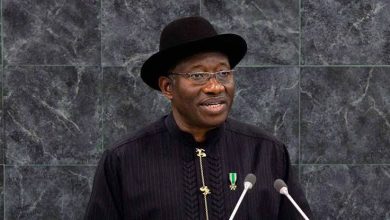
Chairman of Origin Tech Group, Joseph Samuel, has warned that Nigeria’s persistent underinvestment in agriculture poses serious threats to national growth, employment, and food security.
Speaking to Arise News on Sunday during the 25th anniversary of his company, Samuel revealed that the country has invested an average of just 1.4 per cent of its annual budget in agriculture over the past nine years—well below the 10 percent minimum target set by the Maputo Declaration.
According to him, “Nigeria and agriculture over the last 50 years has seen ups and downs.
”In the 1980s, Nigeria reached up to 8.5 percent of GDP investment in agriculture. As of 2027, Nigeria reached 4.7 per cent.
”But the challenge is not even the size of investment; the challenge is the size of the problem that impedes the development of agriculture in Nigeria,” Samuel said.
He highlighted structural issues that continue to hamper agricultural growth, including mechanisation, productivity, and underdeveloped arable land.
His words: “Over time, the Nigerian population has increased, desertification is here, and globally, the competitiveness of agriculture has also been a challenge, requiring more investment.
Agriculture has moved from backyard subsistence farming to intensive, high-tech farming that requires heavy investment,” he further explained.
According to Samuel, much of Nigeria’s arable land remains underutilised. “Nigeria has large forests, but we don’t have enough arable land.
”You need to clear forests to create farmland, which requires long-term investment.
”This neglect over the last 30 to 40 years has added more problems. Gen Z youths are not interested in traditional agriculture; they want mechanised farming.
”But tractors require prepared, arable land, and most of Nigeria’s land is not ready,” he said.
On government initiatives, Samuel acknowledged recent interventions but stressed gaps in implementation.
“I have seen the current administration doing strategic works in terms of re-engineering the sector.
”The mechanisation hubs are supposed to support rural farmers, but when farmers farm, bringing produce to market will require private sector involvement.
Subsistence farming is not the way for Nigeria,” he said.
He also addressed the deployment of tractors imported by the federal government.
“The president imported 2,000 tractors, which is commendable. But how do you deploy them? One year after import, they have not reached smallholder farmers.
”Some tractors have gone to agricultural colleges and universities, which is a good start, but private capital must drive widespread usage,” he noted.
Samuel stressed the importance of collaboration between federal, state, and local governments.
“When federal government makes policy, most states buy in, and then local governments. Collaboration is key.
For example, our partnership with Lagos State is building the largest market to attract capital to support production.
Multiplying such efforts across states is necessary,” he said.
Human capital development was another major concern for Samuel.
“Human resource development is number one. Agriculture today requires high-tech skills, civil, mechanical, electrical, automotive all within agriculture.
”Energy is important, but without skilled manpower, even solar systems cannot be maintained. Developing people committed to land development is the biggest concern,” he explained.
On budgetary priorities, Samuel called on the National Assembly to increase agricultural allocations to at least 4.7 per cent, invest in retooling agricultural colleges and universities, and ensure the Bank of Agriculture attracts private capital.
“With Lagos State building food logistics hubs and other private initiatives, Nigeria could see over 10 percent contribution to agriculture if funds are coordinated,” he said.
Samuel stressed the critical factors for agricultural transformation: “Agriculture in Nigeria requires consistent policy, private sector engagement, mechanisation, and human capital development.
With all these in place, the country can achieve meaningful food security, employment, and national growth.”