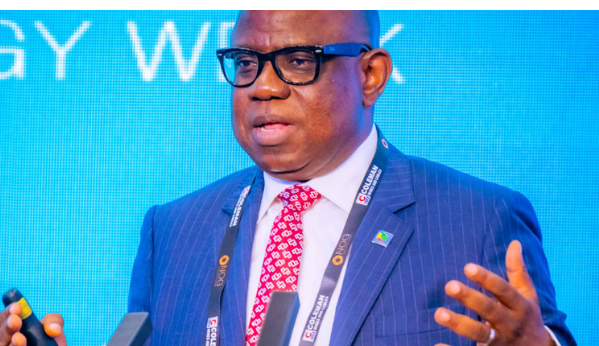
The Group Chief Executive Officer of Nigerian National Petroleum Company Limited (NNPC Ltd.), Bayo Ojulari, has reassured Nigerians that ongoing competition in the downstream petroleum sector will eventually translate into tangible benefits for consumers, despite the transitional pressures currently affecting the market.
Speaking to journalists after a meeting with President Bola Tinubu at his Ikoyi residence on Sunday, Ojulari described the market pressure as an inevitable outcome of the shift towards a fully competitive, willing-buyer, willing-seller framework.
He alao emphasised that while the changes may generate initial frictions, the system is expected to stabilise over time.
“At the end of the day, Nigerians on the streets are going to be the beneficiaries. Where there is healthy competition, the buyers are the ultimate beneficiaries,” he said.
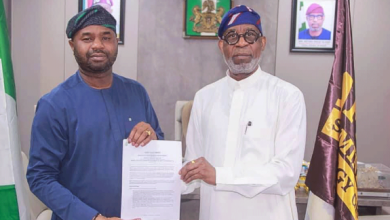
Ojulari explained that his visit was aimed at updating the President on NNPC’s year-end performance, presenting the company’s strategic priorities for 2026, and expressing appreciation for the President’s support of ongoing reforms within the corporation.
“I came to update Mr President about the end-of-2025 performance of NNPC and to discuss our strategic priorities for 2026.
”It is also to thank Mr President for the inspiration he has given to the new NNPC management and board through this very challenging period of transformation,” he stated.
Describing the reforms as necessary though challenging, Ojulari highlighted that presidential backing has been instrumental in the progress recorded so far.
On production, he revealed that NNPC achieved significant growth in 2025 compared with the previous year, with crude oil output rising from 1.5 million barrels per day in 2024 to over 1.7 million barrels per day in 2025.
Gas production also increased from approximately 6.5 billion standard cubic feet per day to over 7 billion standard cubic feet per day.
The CEO further outlined milestones in major infrastructure projects, including the Ajaokuta–Kaduna–Kano Gas Pipeline (AKK).
He revealed that the main line welding had been completed and that the pipeline had successfully crossed the River Niger, a longstanding challenge.
The completion of the main line, he said, would allow connections to begin early next year, supplying gas to key northern cities including Kaduna, Kano, Ajaokuta, and Abuja, and fostering industrialisation through gas-based industries, fertiliser plants, and power generation.
Looking ahead to 2026, Ojulari said increasing production remained NNPC’s top priority, requiring strategic investment.
The company aims to achieve at least 1.8 million barrels per day next year while boosting gas output.
He also noted ongoing efforts to review the company’s asset portfolio to unlock additional value.
President Tinubu, according to Ojulari, commended the management and board for early achievements but reminded them of long-term goals, including attracting over $30 billion in additional investment by 2030 and raising crude oil production to two million barrels per day by 2027.
Addressing downstream pricing and supply concerns, Ojulari explained the structural changes introduced by the Petroleum Industry Act (PIA), which separated regulatory responsibilities from commercial operations.
“Post-PIA, NNPC is not a regulator. We are a CAMA company that must compete profitably,” he said, adding that the company no longer receives federation allocations but continues to act as the supplier of last resort, working closely with key downstream players, including Dangote Refinery.
While acknowledging current market tensions, he insisted the challenges were temporary and highlighted the significance of domestic refining capacity for stabilising supply.
“It is a great thing to have a major refinery in Nigeria supplying West Africa and other parts of the world. What we need to do is to walk through this reality together so that the market forces can stabilise and everyone can be okay,” he said.
Ojulari expressed confidence that sustained reforms and cooperation among stakeholders would ultimately make the benefits of competition more visible to ordinary Nigerians.