The Chairman and Chief Executive Officer of Air Peace, Mr. Allen Onyema, has dismissed allegations that Nigerian airlines engage in exploitative pricing or coordinated fare fixing, describing such claims as unfair, poorly substantiated and damaging to the aviation industry.
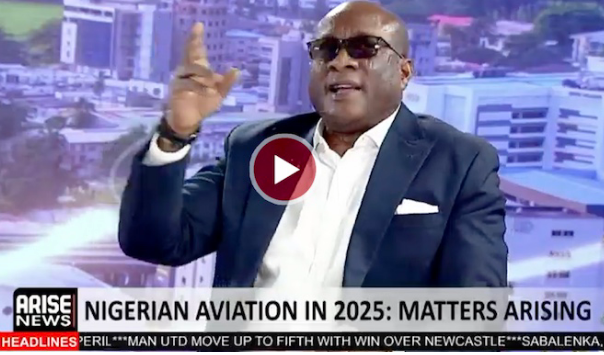
Speaking during an interview on Arise News on Sunday, Onyema expressed concern over accusations reportedly attributed to government agencies.
Onyema noted that such institutions ought to have a better understanding of how airline pricing works.
He said it was troubling that terms such as “exploitative” and “coordinated price fixing” were being used against domestic airlines without clear evidence or defined benchmarks.
According to him, no credible parameters had been presented to justify the conclusion that airlines arbitrarily hike fares or act in concert to fix prices.
Onyema explained that ticket pricing in aviation is driven by established global practices and operational realities, rather than deliberate attempts to exploit passengers.
He dismissed claims that all tickets, particularly during the festive season, sell for excessively high amounts, insisting that lower fares remain available to passengers who book early.
According to him, airline inventory systems are structured in such a way that a limited number of cheaper tickets are released first, while prices increase gradually as demand rises and seats become fewer.
He noted that it was common for passengers on the same flight to have paid significantly different fares, a practice he described as standard across the global aviation industry.
Focusing on travel to the South-East during the Christmas period, Onyema said the routes are often misunderstood.
While flights into the region are usually fully booked during the festive rush, return flights are frequently almost empty, leaving airlines to absorb the full cost of flying aircraft back with little or no passengers.
He stressed that airlines still incur the same operational expenses regardless of passenger load, including fuel, aircraft leasing, maintenance and crew costs.
According to him, unlike charter operations where clients pay for both legs of a journey, commercial airlines must bear the financial burden of near-empty return flights.
Onyema also addressed comparisons between commercial flight operations and Air Peace’s past humanitarian interventions, such as evacuations and rescue missions.
He said such comparisons were misplaced, explaining that those flights were undertaken to save lives during emergencies, not as commercial ventures.
He argued that it was unreasonable to expect airlines to absorb the cost of transporting passengers travelling for leisure during peak seasons, stressing that airlines are businesses with significant overheads.
Responding to claims that airlines profiteer during festive periods, Onyema said the industry was being unfairly demonised, describing airline operations in Nigeria as largely sacrificial rather than excessively profitable.
He insisted that many domestic routes, including those to the South-East, are often loss-making due to imbalanced passenger traffic.
Highlighting the financial strain on airlines, Onyema said operating costs remain extremely high, citing aircraft leasing fees that can run into thousands of dollars per hour.
He added that a significant portion of ticket revenue does not go to airlines, as various taxes, levies and charges account for as much as 65 to 70 per cent of the fare paid by passengers.
According to him, airlines are often blamed for high ticket prices, even though the bulk of the money is paid to other entities within the aviation value chain.
Comparing Nigeria with other countries, Onyema argued that domestic air travel in Nigeria remains among the cheapest globally.
He said that when converted to dollar value, some Nigerian domestic fares are significantly lower than what passengers pay for short-haul flights in Europe or the United States.
He warned that persistent misunderstanding of airline economics and sustained pressure on operators had contributed to the high failure rate of airlines in the country.
Onyema noted that more than 80 airlines had collapsed in Nigeria over the years, a trend he described as one of the worst globally.
He appealed to regulators and the public for restraint and a more informed assessment of the aviation sector, urging authorities to allow domestic airlines to operate without undue hostility.
“Enough is enough,” Onyema said, calling for a fairer and more balanced approach to addressing issues in the industry.