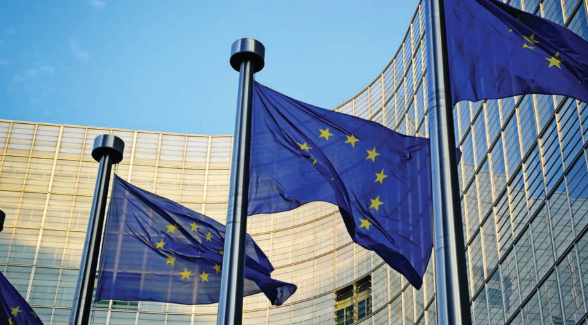
The European Union (EU) has officially removed Nigeria from its list of high-risk countries under the Anti-Money Laundering and Countering the Financing of Terrorism (AML/CFT) framework, a move hailed as a major milestone for the country’s financial sector.
The removal, formalised in the European Commission Delegated Regulation (EU) C (2025) 8460 adopted on December 4, 2025, follows Nigeria’s successful exit from the Financial Action Task Force (FATF) grey list earlier in June and October 2025.
The delisting would take effect from January 29, 2026, and applies alongside other countries, including Burkina Faso, Mali, Mozambique, South Africa, and Tanzania, which also addressed prior AML/CFT deficiencies.
According to the Nigeria Financial Intelligence Unit (NFIU), the EU recognised the country’s significant progress in closing technical and operational gaps in its AML/CFT regime.
The achievements are attributed to coordinated reforms under the leadership of President Bola Ahmed Tinubu, who prioritized strengthening financial system integrity and compliance with international standards.
Speaking on the development, NFIU CEO Hafsat Abubakar Bakari described the delisting as an affirmation of Nigeria’s reform efforts.
“This decision represents an important external validation of Nigeria’s steady progress in strengthening its AML/CFT/CPF framework.
”It demonstrates that consistent reforms, effective coordination, and strong national ownership can translate into tangible international outcomes,” she said.
The delisting carries significant economic implications. Financial transactions between Nigeria and the EU will no longer be subject to the enhanced due diligence measures typically applied to high-risk jurisdictions.
Experts said this would ease compliance burdens, facilitate cross-border transactions, and boost investor confidence, potentially opening new opportunities for trade and investment.
Beyond immediate financial benefits, the NFIU emphasised the broader significance of the decision in reinforcing international confidence in Nigeria’s financial system.
The agency highlighted its role in coordinating national AML/CFT efforts, improving financial intelligence quality, and supporting law enforcement, regulatory, and judicial authorities.
“The achievement is the product of collective national effort. While we celebrate this progress, all stakeholders must sustain momentum, guard against complacency, and continue strengthening our systems in response to evolving financial crime risks,” the CEO added.
Nigeria’s delisting underscores its growing reputation as a cooperative and responsible player in the global financial architecture, strengthening its attractiveness as a reliable trade and investment partner within the European Union.