Tanzania grapples with post-election fallout as President acknowledges missteps

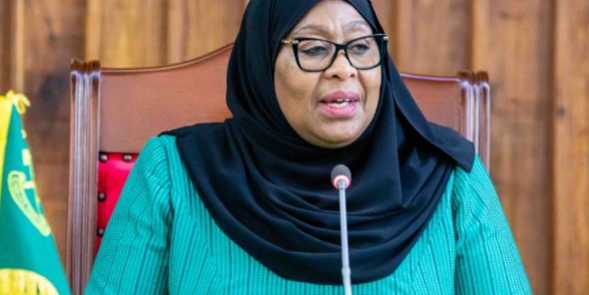
In a move that could signal a shift toward political accountability, President Samia Hassan has addressed the government’s handling of last year’s disputed October elections, including the controversial six-day internet blackout that followed widespread unrest.
Speaking before a gathering of diplomats and international observers, Hassan acknowledged that the measures, while intended to maintain order, disrupted daily life and limited communication during a tense period.
Observers said the president’s comments mark a rare moment of reflection in a political climate often criticized for restricting dissent.
“We recognise the difficulties caused by the unrest and our response,” Hassan said, adding that the actions were motivated by a desire to protect citizens and uphold constitutional order.
The aftermath of the elections was the deadliest Tanzania had experienced in decades, with hundreds of people reportedly killed and scores injured.
Opposition leaders were largely barred from participation, and the main opposition figure remained imprisoned on treason charges, fueling concerns about the fairness of the process.
In an effort to heal divisions, Hassan announced the pardon of 1,787 convicts connected with election-related violence.
Legal experts and civil society leaders viewed the clemency as a step toward reconciliation, though many warn it cannot substitute for broader political reforms.
Political analysts said Hassan’s statements reflected a balancing act: acknowledging grievances while maintaining authority.
“The president is signaling that the government is willing to reflect on its actions without appearing weak,” said a local political commentator.
The government is also under pressure from a commission of inquiry investigating the post-election violence.
The body is examining reports of human rights violations, suppression of the press, and excessive use of force during the crisis.
International organisations have called for sweeping reforms to prevent similar unrest in future elections and to restore confidence in Tanzania’s democratic institutions.
For many Tanzanians, Hassan’s remarks could bring a sense of cautious optimism, suggesting that the government is at least willing to recognise past mistakes.
Yet human rights advocates insisted that words must be followed by actions, including greater political inclusivity, protection for opposition voices, and respect for freedom of expression.
As Tanzania continues to navigate the legacy of the October elections, the president’s acknowledgment and the pardons offer a glimpse of a government attempting to reconcile stability with accountability in a polarized society.