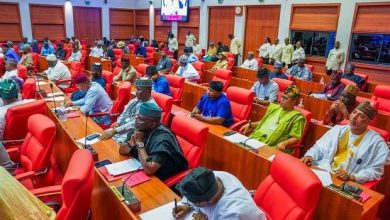
Legal practitioner Godspower Egbule has called for strict adherence to constitutional provisions in the ongoing impeachment proceedings against Governor Siminalayi Fubara, warning that court intervention at this stage would be premature.
Speaking on Ariss News on Monday, Egbule stressed that all actions by the legislature, executive, and judiciary must remain within the boundaries of the Constitution.
“It would be ultra vires for the legislature to act outside constitutional provisions.
”It would also be ultra vires for the court to make orders beyond its constitutional mandate,” he said.
Egbule anchored his argument on Section 188 of the Nigerian Constitution, outlining the sequential impeachment process.
According to him, the procedure begins with a notice of impeachment signed by at least one-third of the House of Assembly, which is sent to the Speaker.
The Speaker then forwards the notice to the governor. Following that, a motion supported by a one-third majority is adopted by the House and referred to the Chief Judge, who sets up a seven-member investigative panel.
Addressing claims by Governor Fubara that he had not received a notice of impeachment, Egbule noted inconsistencies in the governor’s public statements.
“The governor said he did not receive the notice, yet at a public meeting, he euphemistically referred to receiving a ‘love letter’ from them,” he observed.
Egbule also explained the role of the panel, which he described as a mechanism to ensure fairness and due process.
“The panel guarantees a fair hearing to all parties. The governor has the right to legal representation of his choice.
”Any disputes over impeachment allegations should be addressed through this constitutionally established panel, not through the courts at an early stage,” he said.
The lawyer further emphasised that impeachment is not a unilateral process and that all parties must operate within constitutional limits.
“It would be ultra vires for the executive, legislature, or judiciary to act outside the provisions of the Constitution,” he reiterated.
Egbule dismissed claims that impeachment could be motivated by trivial or fabricated reasons.
“At no point did the Constitution allow someone to arbitrarily challenge a House of Assembly action. That is why the seven-man panel exists: to objectively investigate allegations of gross misconduct,” he said.
On the definition of gross misconduct, he cited Section 188, Subsection 11, noting that it is ultimately determined in the opinion of the lawmakers, and that the panel’s role is to assess whether the allegations meet that threshold.
Egbule called for patience and adherence to due process, stressing that impeachment involves collaboration between the House of Assembly and the judiciary, rather than a single branch acting independently.