Babafemi blasts Whizkid for daring to insult his ancestor By Ojudu Babafemi

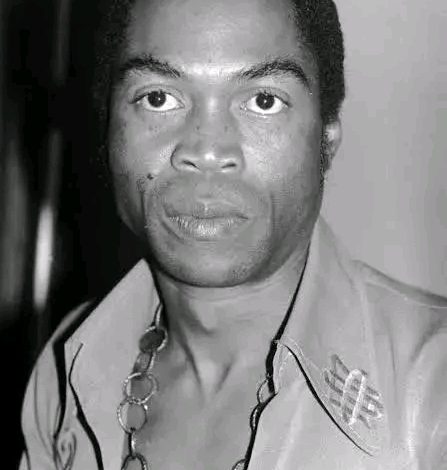
Is it true that a Nigerian youngster said he is greater than Fela?
I sincerely hope he was misquoted.
Even if he were to live ten lifetimes, his art and his life could not measure up to Fela Anikulapo-Kuti.
Is it in art?
Is it in music?
Is it in activism, courage, or originality?
Fela was not just a musician; he was a movement, a conscience, a revolution in human form. His music gave birth to Afrobeat, a genre now studied in universities across the world, sampled by global superstars, and performed on the world’s greatest stages. From Lagos to London, New York to Berlin, Fela’s sound reshaped global music and African identity.
Fela stood alone—fearless in the face of military dictatorships, unapologetic in his resistance to oppression. He used his music as a weapon against injustice, corruption, colonial mentality, and state violence. For this, he was arrested over 200 times, brutalized, imprisoned, tortured, exiled, and silenced—yet never broken.
His mother was murdered by the state. His house, the Kalakuta Republic, was burned to the ground. His property was seized. He was flogged, beaten, and jailed from Alagbon to Panti, hounded by police and soldiers alike. Yet, after every assault, Fela returned with sharper lyrics, deeper rhythms, and more defiant truth.
For any young person—musician or not—to compare himself to Fela, he must first walk the corridors of Nigerian jailhouses: Lagos, Maiduguri, Benin. He must endure police cells and military tribunals. He must lose everything, go into exile, and still return with his creative spirit intact.
Fela was a multi-instrumentalist, a composer, bandleader, philosopher, and cultural theorist. He could play virtually every instrument in his band, wrote complex compositions lasting 15 to 30 minutes, and fused jazz, highlife, funk, Yoruba rhythms, and political poetry into something entirely original—something timeless.
Globally, Fela is honored as:
• One of the most influential musicians of the 20th century
• A cultural icon whose life inspired Broadway productions, documentaries, books, and academic studies
• A symbol of African resistance and intellectual freedom
• A voice for the oppressed, long after his death
Fela did not chase acceptance. The world came to him.
So, whoever this fellow is—if he indeed made such a claim—should simply be ignored. He may be one of those who would flee the country the moment the police knock once on his car window in Ojuelegba.
Fela did not run.
Fela stood.
Fela fought.
And Fela remains immortal.
Anikulapo—the man who carried death in his pouch.