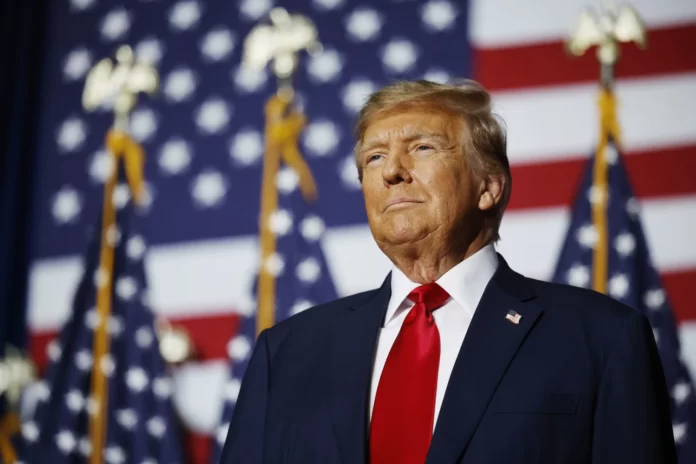
U.S. President Donald Trump has formally withdrawn Canada’s invitation to join his newly established “Board of Peace,” intensifying tensions between the two North American allies.
In a post on Truth Social on Thursday, Trump addressed Canadian Prime Minister Mark Carney directly, announcing that Canada would no longer be considered for membership.
The statement did not provide a reason, and Carney’s office had not immediately responded.
Canada had initially indicated it would accept the invitation in principle but objected to the $1 billion (£740 million) membership fee required of permanent members—a contribution Trump says is needed to fund the board’s operations.
The “Board of Peace” is envisioned by Trump as a new international body for resolving global conflicts, with him as lifelong chairman and broad decision-making authority.
Although the board was initially described as focusing on the war in Gaza and post-conflict reconstruction, its charter makes no mention of Palestine and appears aimed at assuming some functions traditionally handled by the United Nations.
According to the White House, about 60 countries have been invited to join the board, with approximately 35 accepting so far.
These include Argentina, Egypt, Turkey, Saudi Arabia, and Pakistan.
None of the other permanent members of the UN Security Council—China, France, Russia, or the UK—have committed to joining.
European leaders have expressed concerns about the board’s governance and its potential conflict with international law.
European Council President Antonio Costa said the EU had “serious doubts” regarding the board’s compatibility with the UN Charter but remained open to cooperating with the U.S
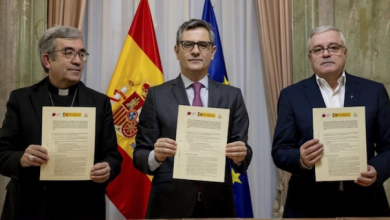
on initiatives related to Gaza. Spain confirmed it declined the invitation altogether.
Observers suggested that Trump’s decision may have been influenced by Carney’s remarks at the World Economic Forum in Davos, where he warned of a “rupture” in the U.S.-led global order and called on middle powers to resist economic coercion by larger nations.
Trump later criticised Canada, asserting that the country benefits disproportionately from the United States and should show greater gratitude.
Responding in Quebec on Thursday, Carney defended Canada’s independence, saying the nation’s success stems from its own identity. “We thrive because we are Canadians,” he said.
The withdrawal marked a significant diplomatic rift and underscores the challenges facing Trump’s controversial initiative amid scepticism from both traditional allies and major international players.