The Lagos State Government has justified the ongoing demolition of structures in Makoko and other waterfront communities, insisting that the exercise is driven by safety, security, and environmental concerns rather than an agenda against poor residents.
State officials made the clarification during Ask Lagos, a weekly interactive discussion held on X, where senior government representatives respond to public concerns.
Participants at the session included the Commissioner for Information and Strategy, Gbenga Omotoso, and the Special Adviser to the Governor on e-GIS and Urban Development, Olajide Abiodun Babatunde.
Addressing widespread criticism, Omotoso said the demolitions were necessary to prevent avoidable disasters, particularly in areas where buildings were erected beneath high-tension power lines and along vital waterways.
He dismissed claims that the exercise was punitive or discriminatory, stressing that public safety remained the government’s primary responsibility.
“No responsible government would allow people to live directly under high-tension cables or block critical waterways,” Omotoso said, warning that a single infrastructure failure in such areas could result in catastrophic loss of life.
He also countered allegations that residents were taken by surprise, stating that affected communities had been engaged for several years.
According to him, existing regulations require structures to maintain a safe distance from power installations, but repeated violations were ignored despite appeals and negotiations.
He noted that residents had even requested reduced setback limits, which the government considered unsafe.
Babatunde explained that the demolitions form part of a broader urban regeneration plan aimed at transforming Lagos into a safer and more sustainable megacity.
Drawing from his background in urban planning and digital mapping, he said decisions were guided by master plans, environmental standards, and safety codes, not arbitrary actions.
He cited previous resettlement efforts, including relocations from Oko Baba to newly built housing estates, to demonstrate that the government had made provisions to support displaced residents.
He added that modern tools such as the e-GIS platform allow citizens to verify zoning regulations in advance, helping to prevent future conflicts.
Despite these assurances, residents, civil society groups, and some participants in the discussion raised concerns about alleged casualties, forceful enforcement, lack of compensation, and unclear resettlement plans.
Others questioned the emotional and social toll of the demolitions.
Responding, Omotoso acknowledged the pain caused by the exercise but urged the public to avoid speculation, calling instead for dialogue and cooperation.
Babatunde maintained that failure to enforce planning regulations could expose the city to disasters far worse than displacement.
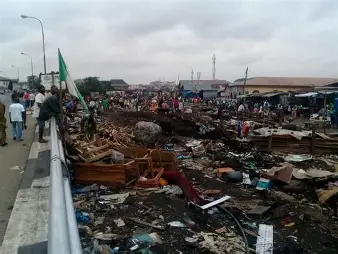
Makoko, a densely populated historic waterfront settlement estimated to house over 100,000 people, has witnessed the demolition of more than 3,000 homes since December 2025, displacing over 10,000 residents.
The operations reportedly involved armed security personnel, tear gas, and heavy machinery, leading to deaths, injuries, and the destruction of schools, clinics, and places of worship.
While residents alleged that the demolitions were a cover for land acquisition by private interests, the Lagos State Government insisted the actions are preventive measures taken in the interest of public safety and the long-term development of the city.