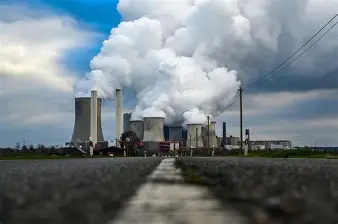
The Federal Government has expressed serious concern over the escalating health consequences associated with greenhouse gas emissions, warning that Nigeria is facing a growing public health crisis driven by environmental pollution.
The Minister of Environment, Mr. Balarabe Lawal, raised the alarm on Monday in Abuja during a stakeholders’ forum focused on addressing diseases linked to greenhouse gas emissions.
The engagement, organised by the Environmental Health Council of Nigeria (EHCON), brought together policymakers, environmental experts, and public health professionals.
Represented by the ministry’s Permanent Secretary, Mr. Mahmud Kambari, the minister said recent data from environmental monitoring, medical records, and scientific evaluations reveal a troubling rise in illnesses associated with deteriorating environmental conditions.
He noted that respiratory ailments, heart-related diseases, and other pollution-induced health problems are becoming increasingly common across the country.
According to him, the situation has moved beyond environmental degradation and now constitutes a full-scale public health emergency.
He warned that the pace at which environmentally related diseases are increasing far exceeds the capacity of Nigeria’s healthcare system to manage them effectively.
Lawal explained that the consequences are already being felt at household and national levels, with families incurring higher medical expenses, declining productivity in the workforce, and environmental damage threatening the country’s broader development objectives.
He attributed part of the challenge to the lack of a unified national strategy for tackling health risks arising from greenhouse gas emissions, describing this gap as a major obstacle to effective intervention.
In response, the Federal Government, working in collaboration with EHCON and other key partners, has launched the National Emergency Response Initiative on Environmental Public Health Impacts of Greenhouse Gas Emissions (NERI-EPHIGGE).
The initiative is designed to provide an integrated framework for addressing both the immediate and long-term health effects of greenhouse gas pollution.
The minister explained that the initiative would strengthen environmental health regulations, improve enforcement mechanisms, and establish surveillance and rapid response units across the country.
It also prioritises the adoption of cleaner energy sources, environmentally responsible industrial practices, low-emission transportation systems, and sustained public education campaigns aimed at encouraging positive behavioural change.
Lawal assured stakeholders that the Ministry of Environment would continue to collaborate with state governments, relevant agencies, development partners, and civil society organisations to ensure that environmental protection efforts lead to tangible improvements in public health.
He stressed that responsibility for addressing the crisis must be shared, noting that government action alone would not be sufficient.
Regulatory agencies, industries, and players in the transport and energy sectors, he said, must all play active roles in reducing emissions and protecting public health.
“The cost of failing to act is far greater than the cost of taking decisive action,” he said, adding that scientific evidence clearly demonstrates the urgency of the situation and the immediate risks posed to human health.
The minister called on all stakeholders to fully support the implementation of the emergency response initiative, urging collective commitment toward achieving a cleaner environment, improved health outcomes, and sustainable national development.
He also commended EHCON for organising the forum, describing it as timely and essential as Nigeria confronts the increasing health challenges associated with pollution and greenhouse gas emissions.
Lawal further observed that Nigeria’s rapid urban growth, industrialisation, rising energy consumption, and expanding transportation networks—while signs of economic progress—have also contributed significantly to increased levels of environmental pollution.
These developments, he warned, have intensified greenhouse gas emissions with direct and indirect consequences for the health and wellbeing of citizens.