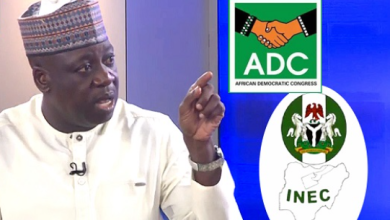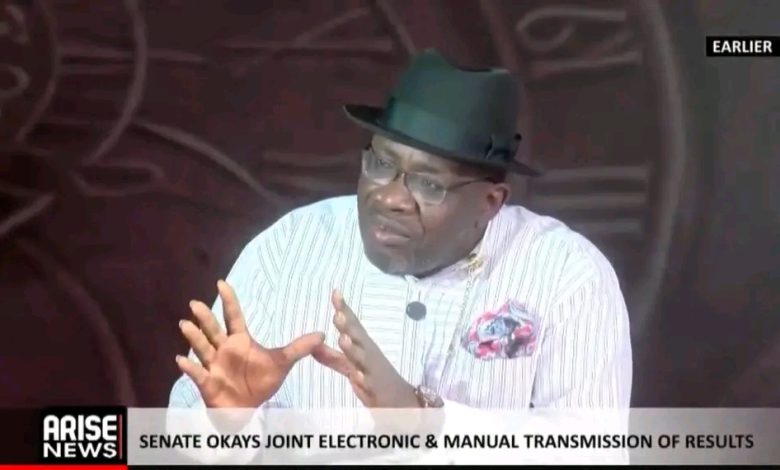
Today, I gave an interview at ARISE Television.
In the interview, I explained how, as a member of the Electoral Committee, I felt deeply disappointed when, while I was in Bayelsa mourning the demise of my brother, the Deputy Governor, I heard that the Senate refused to pass the clause on mandatory electronic transmission of election results from polling stations.
This was what we had been working on for in the past two years, and the House of Representatives passed exactly what we agreed on.
I expressed appreciation to the Speaker of the House, Tajudeen Abbas, the Chairman of the House Committee, and other members of the House for doing the right thing.
I saw the protests, the agitations, and the anger by Nigerians, and I share in them. As someone who worked and fought for the concept of electronic transmission of election results in the 9th Senate, where we even took a division of the Senate on this issue, I feel bad that the Senate did not pass what we took time to harmonise through several workshops and conferences, even with the presence of INEC.
Today, I attended my first session for the year. Having ended my mourning, I went to attend the emergency session that was summoned. I met with some members of the Senate leadership and confronted them on the matter.
They assured me that we would work on how to correct it, and, true to their words, they brought a motion for rescission, moved by the Senate Chief Whip, my friend, Senator Tahir Monguno.
However, they added a proviso that validates election results that could not be transmitted as a result of network failure in some areas.
Let me be clear: INEC had told us that they have the capacity to transmit election results nationwide, and we believe them. However, in parliament, you don’t get all you want at the time you want.
The parliamentary system involves lobbying, negotiations, consensus-building, and making incremental progress.
What happened today was not a loss to democracy; it was incremental progress. It was not what we fought for or prepared for, but it is still something we can work with while hoping to improve on it later.
While I understand that Nigerians are concerned about real-time monitoring, IREV was introduced by INEC as an improvement on the Card Reader and the BVAS.
IREV was introduced to give Nigerians and the general public access to a transparent INEC portal, providing an indication of votes from the primary voting centres, that is, polling stations.
It does not collate election results, nor is it proof of any election win, but it shows results in real time, and we still have that even in the version passed by the Senate.
As it stands, in addition to the law, INEC will issue guidelines mandating Presiding Officers, after voting and signing of results, to make copies and transmit them electronically to IREV.
If we achieve that, it amounts to real-time monitoring of results from polling stations upwards.
Where results are changed and democracy faces its greatest assault is at the collation centres—the Ward Collation Centres and the Local Government Collation Centres.
The introduction of IREV, and the National Assembly’s passage of mandatory electronic transmission of polling unit results to IREV, has addressed the problem of manipulation at collation centres.
So, candidates and parties who do well at polling stations, which are the primary evidence of elections, can collate results and know who has won, thereby cutting off the brigandage, executive interference, and thuggery that mar our elections at collation centres.
So, while this is not the ideal outcome, Nigerians can be assured that our democracy is moving forward. As I said, in parliament, we don’t get all we want at the time we want, especially when we do not have the numbers.
Right now, the opposition does not have the numbers to insist on committee reports coming out the way it did.
This was the best we could get under the circumstances, and it is not too bad. It is something we can work with while hoping to improve on it later.
I encourage Nigerians, therefore, to take interest in mobilising to their polling units and voting for credible people who can protect the democratic rights of our people.
Nigeria does not practice electronic voting, so there is no real-time monitoring of votes before they are declared by Presiding Officers at polling stations. After results are declared by Presiding Officers, real-time monitoring begins on IREV.
If I were a member of the Conference Committee, I would have voted for the House version because that was what we agreed on.
I disagree with the proviso in the Senate version because it does not add to the law of the country, which states that Form EC8A is the election result.
Laws are made for general rules, not exceptions. The proviso only addresses rare cases where there is network failure. I do not expect INEC to allow its officials and agents to operate as if the exception were the general rule. In any case, polling agents who disobey stand the risk of being penalised under this law.
I call on all Nigerians to sensitise and mobilise to polling stations, vote for credible candidates, and insist that their votes count and are transmitted on IREV.
INEC has said it can transmit election results nationwide, and we believe them. Anywhere someone can make calls, send or receive money electronically, INEC can also upload and transmit election results electronically. This is not a decision Presiding Officers can make arbitrarily.
INEC and Nigerians should get ready to sensitise and mobilise, even if the Senate version of the Electoral Act is upheld.
Sensitise and mobilise. Don’t give up on our democracy.
-HSD