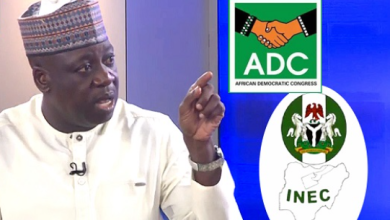
Senator Seriake Dickson, a member of the Senate Committee on Electoral Matters, has assured Nigerians that the Senate’s recent amendments to the Electoral Act Amendment Bill still guarantee mandatory electronic transmission of election results, despite controversy surrounding the removal of the words “real time” from the legislation.
Speaking in an interview with Arise News on Tuesday, Dickson said the Senate’s decision should not be seen as a setback for democracy.
He revealed he was in Bayelsa mourning his late brother, the Deputy Governor, when news broke of the Senate’s decision, describing the development as deeply disappointing.
As a member of the Electoral Committee, he said the clause had been the product of two years of consultations, workshops, and engagements, including sessions with the Independent National Electoral Commission.
He commended the House of Representatives for passing the harmonised version and thanked Speaker Tajudeen Abbas, the House Committee Chairman, and members for their support.
The senator said he understood and shared the anger expressed by Nigerians, recalling his advocacy for electronic transmission during the 9th Senate, when the chamber took a formal division on the issue.
Upon resuming from mourning, he attended an emergency plenary and confronted Senate leaders over the matter, seeking immediate redress.
According to him, the leadership responded with a motion for rescission moved by Senate Chief Whip, Senator Tahir Monguno.
However, the revised version included a proviso validating results not electronically transmitted due to network failure in certain areas.
He acknowledged the compromise was not ideal but described it as incremental progress within a parliamentary system shaped by negotiation and consensus-building.
“Parliament does not always give you all you want at once,” he said, stressing that democracy advances through gradual reforms.
He maintained that INEC had assured lawmakers of its capacity to transmit results nationwide and said he believed the commission.
The senator clarified that Nigeria does not practice electronic voting, and real-time monitoring only begins after results are declared at polling units.
He explained that the INEC Result Viewing Portal, IREV, was introduced to enhance transparency, allowing the public to view polling unit results in real time.
IREV, he noted, does not collate or determine winners but provides visibility of declared results from primary voting centres.
He argued that manipulation historically occurs at ward and local government collation centres, not at polling units.
Mandatory electronic transmission of polling unit results to IREV, he said, curbs brigandage, executive interference, and thuggery at collation centres.
The senator emphasised that Form EC8A remains the legally recognised election result, and laws are made for general rules, not rare exceptions.
He disagreed with the Senate’s proviso, stating it addresses limited network failures and should not become the norm.
INEC guidelines, he added, would compel Presiding Officers to upload signed results to IREV after declaration at polling units.
“Anywhere you can make calls or send money electronically, INEC can transmit results,” he asserted.
He urged Nigerians to mobilise, vote for credible leaders, and insist their votes are counted and transmitted.
Even if the Senate version stands, he said citizens must remain vigilant and committed to strengthening democracy.
“Sensitise and mobilise. Don’t give up on our democracy,” he said.