The Independent National Electoral Commission has proposed N873.78 billion for the conduct of Nigeria’s 2027 general elections.
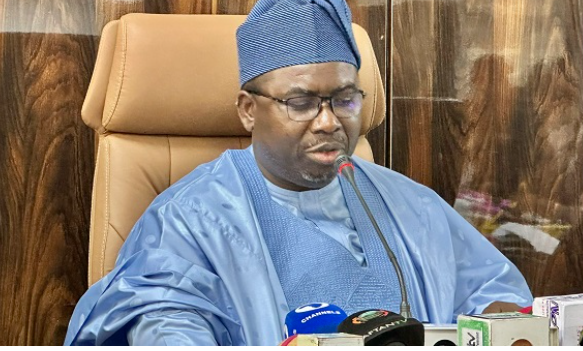
INEC Chairman, Joash Amupitan, presented the estimate before the National Assembly Joint Committee on Electoral Matters on Thursday.
He said the proposal outlines the full financial requirements for organising the nationwide polls.
According to the breakdown, operational expenses account for N375.75 billion, covering logistics and field activities.
Administrative costs are projected at N92.31 billion to handle coordination and support services.
Technology-related expenditure stands at N209.21 billion, reflecting investments in electronic systems and digital infrastructure.
Capital items are estimated at N154.90 billion, bringing the four major components to over N832.16 billion.
INEC also budgeted N41.61 billion for miscellaneous expenses, raising the total to N873.78 billion.
Amupitan clarified that the election estimate is distinct from the Commission’s proposed N171 billion 2026 budget.
He explained that the 2026 allocation will fund routine operations, including by-elections and off-cycle governorship contests.
The INEC chairman noted that the early submission complies with the Electoral Act 2022 requirement for advance presentation.
The lawmakers questioned funding modalities and compliance with provisions on electronic transmission of results.
Chairman of the Joint Committee, Samuel Lalong, assured that the proposal would undergo detailed scrutiny.
He emphasised that while INEC submits estimates, appropriation authority lies with the legislature.
The committee also reviewed funding for members of the National Youth Service Corps expected to serve as ad hoc staff.
INEC projected deploying about 450,000 corps members for the 2027 elections.
Each corps member is proposed to receive N127,000, alongside feeding and training allowances.
The budget debate comes amid renewed controversy over amendments to the Electoral Act 2022.
The Senate had earlier rejected a clause mandating real-time electronic transmission of polling unit results.
The disputed provision sought compulsory upload of results to INEC’s Result Viewing Portal after completion of statutory forms.
The upper chamber retained a clause allowing INEC discretion on transmission methods.
The move triggered protests by civil society groups and political actors.
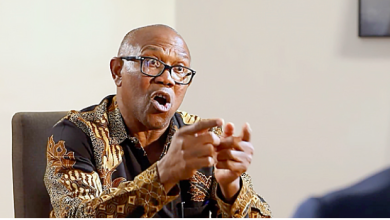
Among those who criticised the decision were Peter Obi and Rotimi Amaechi.
The Nigerian Senate later reversed its position during an emergency plenary.
The lawmakers approved electronic transmission while permitting manual collation as backup in case of technical failure.
The amendment was sponsored by Tahir Monguno and supported by Abba Moro.
Both chambers are expected to harmonise their versions of the bill before final passage.