Nigeria has obtained a $62.8 million concessional loan from the Kuwait Fund for Arab Economic Development to enhance climate-resilient school infrastructure, improve teacher training, and expand inclusive access to education.
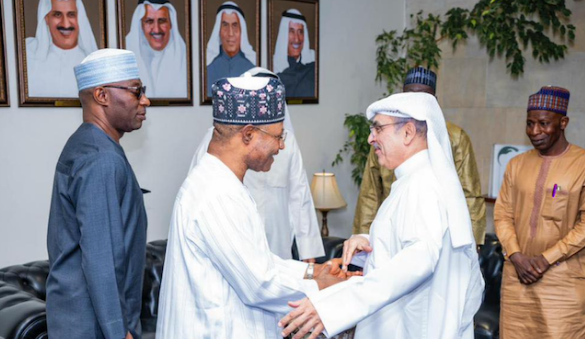
The Federal Government announced the agreement during celebrations marking Kuwait’s 65th National Day and 35th Liberation Day in Abuja.
Ambassador Dunoma Ahmed, Permanent Secretary of the Ministry of Foreign Affairs, represented by Bukar Hamman, explained that the 2025 financing agreement reflects the deepening Nigeria–Kuwait partnership and shared commitment to human capital development.
The loan would be directed toward upgrading school infrastructure to withstand climate-related challenges, enhancing teacher capacity, and improving access to quality education for girls and children with disabilities.
Ahmed emphasised that this collaboration translates bilateral relations into practical social impact:
“Kuwait has remained a trusted development partner. Our cooperation has moved beyond formal ties to practical interventions that directly address Nigeria’s social and economic priorities.”
The two countries are also broadening engagement in agriculture, food security, renewable energy, infrastructure development, and digital connectivity, while subnational governments in Nigeria are positioning to attract Kuwaiti investment.
Salim Almuzayen, Kuwait’s Ambassador to Nigeria, described the celebration as a testament to enduring partnerships built on mutual respect and sustainable development.
He highlighted the “Reaching Out-of-School Children” initiative in Kaduna State, funded by the Kuwait Fund in collaboration with UNICEF, which aims to reintegrate over 200,000 out-of-school children into formal education.
Since its establishment in 1961, the Kuwait Fund has financed projects in more than 100 countries across education, health, and infrastructure sectors.
The $62.8 million facility is expected to strengthen Nigeria’s ongoing education reforms, particularly in climate adaptation and inclusive access — central priorities for national development.