Washington freezes assets of 18 Nigerians, cites terrorism, cybercrime, drug trafficking links

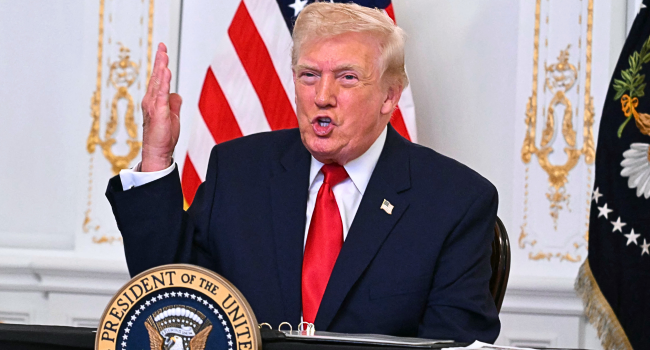
The administration of Donald Trump has announced sweeping sanctions against 18 Nigerian individuals and entities over alleged involvement in terrorism financing, cyber-enabled fraud, and international narcotics trafficking.
The measures, unveiled by the U.S. Department of the Treasury, include asset freezes and restrictions under multiple sanctions frameworks managed by the Office of Foreign Assets Control (OFAC).
The designations fell under categories targeting Specially Designated Global Terrorists (SDGT), cyber-related threats, and Specially Designated Narcotics Trafficking Kingpins (SDNTK).
The move comes at a time when Washington is simultaneously expanding military cooperation with Nigeria, signalling a dual-track approach that combines security collaboration with financial and legal pressure on suspected transnational networks.
Among those named are individuals allegedly linked to extremist organisations operating in Nigeria’s northeast, including Boko Haram, Islamic State West Africa Province (ISWAP), and Ansaru.
The U.S. government listed former Boko Haram leader Abubakar Shekau, alongside ISWAP-linked figures Abu Musab al-Barnawi and Khalid al-Barnawi, under its global terrorism sanctions regime.
Several other individuals were also designated for what U.S. authorities described as their roles in supporting insurgent logistics and operational networks.
In addition, the Nigerian branch of the Revival of Islamic Heritage Society was cited for allegedly providing material backing to extremist elements.
The Treasury Department further imposed sanctions on businessman Fawzi Reda Fawaz over alleged connections to activities linked with Hezbollah.
An Abuja-based retail outlet, Amigo Supermarket, was also named for purported financial ties to networks aligned with Iran.
Under U.S. law, all property and interests in property belonging to the designated individuals and entities within American jurisdiction are blocked, and U.S. persons are generally prohibited from engaging in transactions with them.
Separate actions targeted five Nigerians accused of orchestrating sophisticated cyber-fraud schemes that allegedly defrauded victims and institutions across multiple jurisdictions.
They were designated under the CYBER2 programme, which addresses significant malicious cyber-enabled activities.
In another development, two individuals were sanctioned under the narcotics kingpin framework for alleged involvement in international drug trafficking operations.
The designation subjects them to financial restrictions aimed at disrupting global narcotics supply chains and associated money-laundering networks.
The sanctions were announced amid heightened U.S.–Nigeria security engagement.
In December 2025, American forces carried out precision strikes against Islamic State-aligned militants in Sokoto State, in coordination with Nigerian authorities.
The intervention was confirmed by Nigeria’s Defence Headquarters as part of broader counterterrorism efforts.
Since then, additional U.S. personnel have reportedly been deployed to Nigeria to provide intelligence support, operational training, and logistics assistance.
Military officials in Abuja have maintained that the cooperation respects Nigeria’s sovereignty and centres on capacity building rather than unilateral foreign action.
The evolving partnership follows earlier diplomatic tensions, including warnings from U.S. lawmakers over religious violence and congressional inquiries into insecurity in parts of Nigeria.
Analysts said the latest sanctions underscore Washington’s intention to intensify financial and legal pressure on individuals and entities it believes were fuelling instability, while strengthening collaborative efforts with Nigerian security forces to combat extremist threats and organised crime.