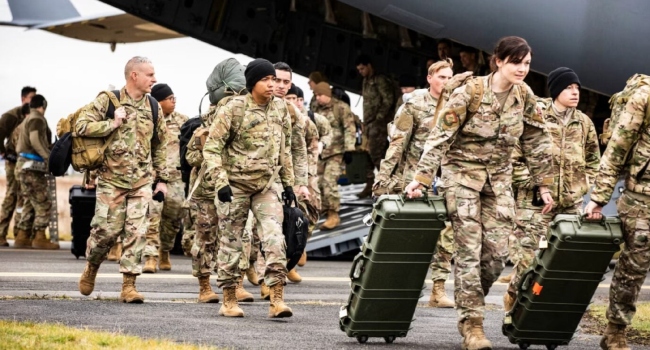
The Defence Headquarters has confirmed the arrival of 100 United States military personnel and equipment in Nigeria to support counter-terrorism efforts.
According to the military high command, the U.S. contingent landed at Bauchi airfield under a recently concluded bilateral security agreement.
Defence spokesman Samaila Uba said the deployment followed a formal request by the Federal Government for training, technical assistance and intelligence cooperation.
He explained that the American personnel are technical specialists assigned strictly to advisory and training roles.
Uba emphasised that the foreign troops are not combat forces and will operate under Nigeria’s authority and coordination with the Armed Forces.
The collaboration, he noted, will strengthen operational capacity, intelligence gathering and specialised technical capabilities.
The joint training exercises and intelligence-focused engagements are expected to commence in the coming days.
The initiative aims to improve Nigerian troops’ ability to detect and neutralise extremist groups threatening national security.
The announcement comes amid heightened scrutiny of Nigeria’s security situation by U.S. President Donald Trump.
Trump recently criticised Nigeria’s handling of attacks on Christian communities and designated the country as a “Country of Particular Concern.”
The Nigerian government rejected the claim, insisting that insecurity affects citizens of all faiths.
U.S. Africa Command head Dagvin Anderson had earlier confirmed that a small US team was in Nigeria to provide intelligence.
Critics questioned the partnership, raising concerns about sovereignty and territorial integrity.
However, Defence Headquarters maintained that the cooperation focuses on capacity building, professional military education and logistics support.
Nigeria continues to battle insurgent groups including Boko Haram and its splinter faction Islamic State West Africa Province.
Authorities said the renewed partnership seeks to degrade terrorist networks and restore stability across affected regions.