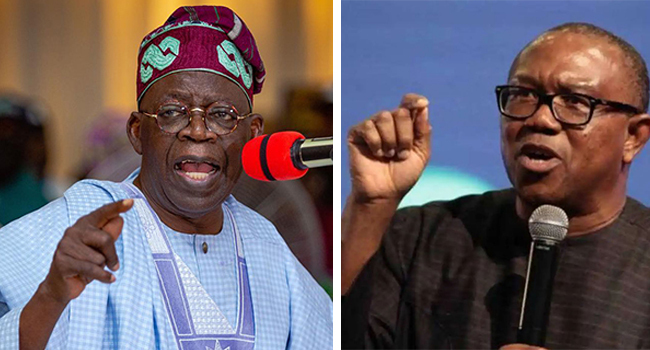
A chieftain of the African Democratic Congress, Peter Obi, has criticised President Bola Tinubu over what he described as the administration’s failure to provide stable electricity for Nigerians.
In a statement shared on X on Tuesday, the former Anambra State governor reminded the president of his campaign promise to ensure steady power supply within four years.
He argued that more than two years into the administration, Nigerians are still grappling with erratic electricity.
Obi particularly faulted plans to disconnect the Presidential Villa from the national grid and rely solely on solar power.
According to him, while renewable energy adoption is commendable, the move sends the wrong signal about leadership and accountability.
He referenced provisions in the 2025 and 2026 budgets allocating billions of naira for solar power and maintenance projects at Aso Rock, questioning why the seat of power would abandon the same grid that serves ordinary citizens.
“It is a gross neglect and deeply worrisome when the seat of power abandons the national grid,” Obi said, arguing that government institutions should lead efforts to strengthen the system rather than distance themselves from it.
Obi maintained that while Nigerians may not expect perfect delivery of campaign promises, they deserve measurable progress and transparency when challenges arise.
The criticism comes amid persistent instability in Nigeria’s electricity sector, marked by repeated national grid collapses.
Grid Challenges
Nigeria has recorded multiple grid failures in recent months. On January 27, the grid suffered its second collapse of 2026, following a similar incident earlier in January and another in late December 2025.
During the latest collapse, electricity generation reportedly dropped from over 4,500 megawatts to zero, leaving distribution companies without power allocation.
Industry experts attributed the recurring breakdowns to technical faults, inadequate maintenance of transmission infrastructure, and fluctuations in generation capacity.