U.S. President Donald Trump has launched a blistering attack on members of the Supreme Court of the United States following a landmark ruling that invalidated his administration’s sweeping global tariffs.
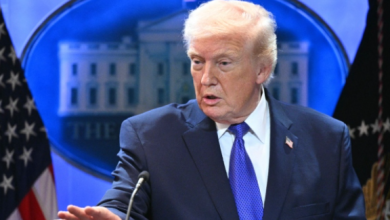
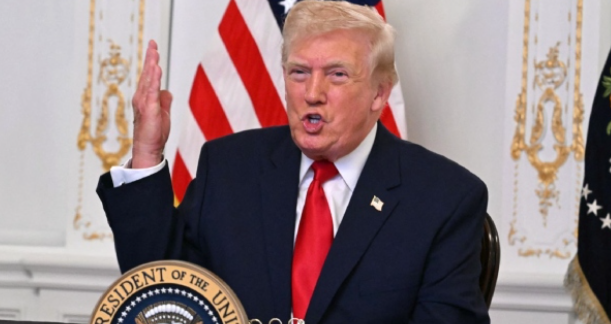
Speaking to reporters at the White House, Trump expressed anger at the 6–3 decision, accusing some of the justices of lacking patriotism and suggesting without presenting evidence—that foreign interests may have influenced the outcome.
The ruling marked a significant setback for the president before a court that has generally been viewed as conservative-leaning.
In a notable twist, two justices appointed by Trump—Amy Coney Barrett and Neil Gorsuch—joined Chief Justice John Roberts and the court’s three liberal members in striking down the tariff measures.
Trump declined to state directly whether he regretted their nominations but described their decision as deeply disappointing.
He went further, questioning their judgment and sharply criticising their stance.
By contrast, he reserved praise for Justices Clarence Thomas, Samuel Alito and Brett Kavanaugh, who dissented.
Trump singled out Kavanaugh in particular, commending his lengthy dissenting opinion and describing him as exceptionally capable.
In one of the most contentious moments of the press interaction, the president alleged that the court may have been “swayed by foreign interests.”
Pressed by reporters to provide proof, he responded that details would emerge later but offered no immediate substantiation.
The remarks represent an extraordinary escalation in rhetoric toward the judiciary, an institution traditionally insulated from direct political confrontation.
Vice President JD Vance echoed the president’s dissatisfaction, characterising the ruling as judicial overreach and accusing the court of undermining executive authority.
The Supreme Court’s decision effectively blocked the administration’s attempt to impose wide-ranging tariffs under its interpretation of executive powers, setting the stage for renewed debate over trade authority and constitutional limits.
The ruling and Trump’s response have intensified scrutiny of the relationship between the executive branch and the judiciary.
Legal scholars noted that while presidents often disagree with court decisions, direct personal attacks on sitting justices are uncommon and risk deepening institutional tensions.
As Washington prepares for the upcoming State of the Union address, attention will focus not only on trade policy but also on the broader balance of powers between the White House and the nation’s highest court.
For now, the episode underscores a pivotal moment in Trump’s presidency—where a court shaped in part by his own appointments has delivered a decision that challenges the reach of his economic agenda.