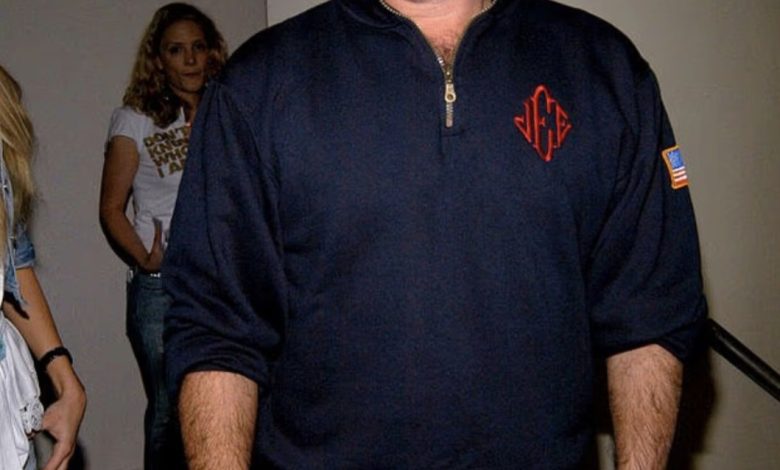
Jeffrey Epstein, one of the most enigmatic figures of the late 20th and early 21st centuries, amassed extraordinary wealth, influence, and access to the world’s elite despite having no college degree, no verifiable credentials, and no documented business successes.
His rise, experts said, was not a product of merit—it was a carefully constructed network of patrons, mentors, and institutional blind spots.
1974: Teaching Without a Degree
Epstein’s unusual career began at the Dalton School in Manhattan, where he was hired to teach math and physics despite lacking a college degree—a near-impossible feat in elite private education.
His appointment was facilitated by Donald Barr, a former OSS officer during World War II and father of future U.S. Attorney General William Barr. Barr’s connections granted Epstein direct access to the children of Manhattan’s wealthiest families, laying the foundation for future introductions into elite financial and social networks.
1976–1981: Wall Street and Early Finance
Two years later, Epstein leveraged these connections to join Bear Stearns, one of Wall Street’s most prestigious firms.
Introduced by a Dalton parent and personally endorsed by CEO Alan “Ace” Greenberg, Epstein bypassed traditional finance qualifications.
Within four years, he became a limited partner—a position typically reserved for decades of proven financial expertise.
During this period, Epstein gained extensive knowledge of tax shelters, offshore accounts, and asset protection strategies used by the ultra-wealthy.
In 1981, Bear Stearns forced him out amid an SEC insider trading investigation linked to the Seagram Company. Remarkably, Epstein faced no charges, a pattern that would repeat in his career: legal accountability rarely reached him, despite clear risk.
Mid-1980s: Reinvention and Mentorship
After leaving Wall Street, Epstein rebranded himself as a “financial recovery” specialist, claiming to retrieve stolen assets for governments and high-net-worth individuals.
During this time, he was mentored by Sir Douglas Leese, a British defense contractor and arms dealer, who taught him international arms dealings and off-the-books financial operations.
Epstein now operated outside traditional banking systems, gaining skills in black-market finance that few could match.
1987: Ponzi Scheme and Leslie Wexner
In 1987, Epstein was involved with Steven Hoffenberg’s Towers Financial Ponzi scheme, which defrauded investors of over $450 million.
Hoffenberg went to prison for 20 years, but Epstein was never questioned, despite later testimonies claiming he orchestrated the scheme.
This reinforced Epstein’s understanding that his connections offered protection from legal scrutiny.
That same year, Epstein met billionaire Leslie Wexner, founder of The Limited and Victoria’s Secret.
Wexner, despite his wealth and access to top advisors, gave Epstein total control of his finances through an expansive power of attorney and transferred a $56 million Manhattan townhouse to him.
Epstein wired the property with hidden cameras and used it as the center for recruiting young women through Wexner’s brands.
Late 1980s–1990s: Maxwell
Epstein’s social and operational network expanded through connections to Robert Maxwell, the British media mogul and arms dealer.
After Maxwell’s suspicious death in 1991, his daughter Ghislaine Maxwell became Epstein’s partner.
Maxwell brought a network of elite contacts—royalty, politicians, scientists, and billionaires—and professionalised Epstein’s recruitment operations, scouting at elite institutions and social events while maintaining a cover of legitimacy.
1990s: Blackmail and Surveillance
During the 1990s, Epstein outfitted his properties with surveillance technology, including hidden cameras and audio recording devices in New York, Palm Beach, and New Mexico.
These systems allowed him to document encounters with influential figures, creating leverage that reinforced his power and insulated him from potential exposure.
1993–1995: White House Access
Between 1993 and 1995, Epstein visited the Clinton White House 17 times, often accompanied by young women.
These visits, mostly with staffer Mark Middleton—later tied to illegal campaign fundraising—highlighted the extent of Epstein’s social access. Despite the unusual circumstances, no official intervention occurred.
2000s: Tech, Science, and Influence
In the 2000s, Epstein shifted focus to the intellectual elite, cultivating relationships with tech magnates such as Bill Gates, Sergey Brin, and Nathan Myhrvold.
He donated millions to MIT and Harvard and hosted salons where Nobel laureates and innovators convened, positioning himself as a philanthropist and intellectual.
This period marked the transition from social and financial power to influence over the future elite.
2008: Plea Deal and Immunity
Federal prosecutors built a 53-page indictment in 2008, documenting crimes against 36 underage girls.
Yet Epstein avoided full prosecution. U.S. Attorney Alex Acosta offered a plea deal allowing Epstein to serve only 13 months in county jail, with work release privileges.
The agreement also provided immunity to unnamed co-conspirators. Years later, Acosta revealed he had been told Epstein “belonged to intelligence” and should be left alone.
Epstein’s career reveals a repeated pattern: at every juncture, where legal, professional, or ethical barriers should have stopped him, they were absent.
He was hired without credentials, promoted without experience, shielded from prosecution, funded by billionaires, and embedded into elite networks—all while building wealth and influence far beyond what his resume could justify.
Observers argued that Epstein’s rise was not about talent but about access, mentorship, and protection from powerful networks, raising critical questions about accountability and systemic failure among the global elite.