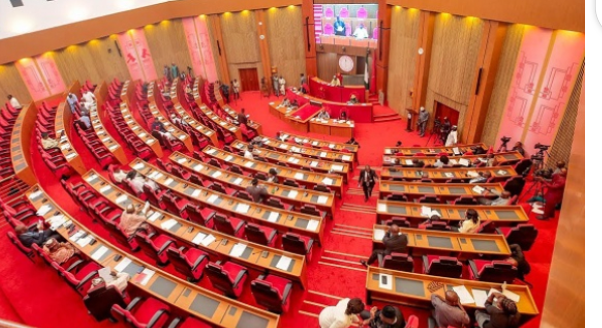
The Nigerian Senate has raised concerns over examination charges, technical hitches and limited access to tertiary education in rural communities during an oversight session with the Joint Admissions and Matriculation Board (JAMB).
At the meeting of the Senate Committee on Tertiary Institutions and TETFund, lawmakers scrutinised the board’s operations, focusing on the financial burden placed on candidates, the efficiency of its registration portal and its rising budgetary allocation.
Senator Amos Yohanna, representing Adamawa North, questioned the justification for the fees paid by candidates seeking admission into higher institutions.
He argued that, given the prevailing economic strain on households, the charges imposed by the examination body require careful review.
Other members echoed the sentiment, stressing that access to tertiary education should not be hindered by mounting costs, especially for students from low-income families.
The lawmakers also drew attention to complaints from candidates who reportedly encountered difficulties logging into JAMB’s online platform during registration and other processes.
The committee demanded clarity on steps being taken to strengthen the board’s digital infrastructure and prevent system failures.
Chairman of the Committee, Senator Mohammed Dandutse, emphasised the need for improved coordination among agencies involved in the admission process.
He noted that many applicants struggle annually to secure placements in universities, polytechnics and colleges due to gaps in collaboration between stakeholders.
The committee further underscored the importance of full remittance of revenue generated by JAMB into the Federation Account, in line with public finance regulations.
Access to registration and examination centres in rural communities also featured prominently in discussions.
The lawmakers observed that candidates in underserved areas often travel long distances to complete registration or sit for the Unified Tertiary Matriculation Examination (UTME), creating additional financial and logistical burdens.
In response, JAMB officials informed the Senate that new Computer-Based Test (CBT) centres would be established across the country to bridge the gap and improve inclusivity.
The board was also asked to justify its increased budget allocation, reportedly exceeding one billion naira.
The Senators sought a detailed breakdown of projected expenditures, including whether the additional funds would cover recruitment or infrastructural upgrades.
JAMB disclosed that it anticipates about one million candidates in the 2025 admission cycle, reflecting a steady rise in enrolment.
It also projected an Internally Generated Revenue target of N23.8 billion for the 2026 fiscal year.
The session formed part of the Senate’s broader oversight responsibilities, aimed at ensuring transparency, accountability and equitable access within Nigeria’s tertiary education system.