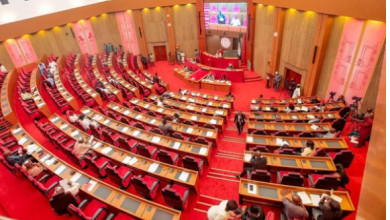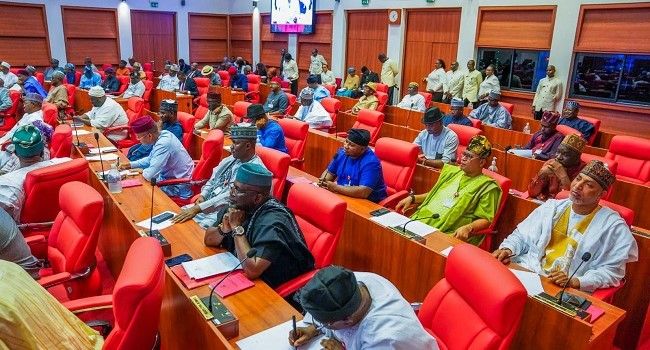
The Nigerian Senate on Thursday rejected the traditional envelope budgeting system, advocating instead for a performance- and priority-driven fiscal framework aimed at improving the implementation of government programmes and ensuring greater accountability.
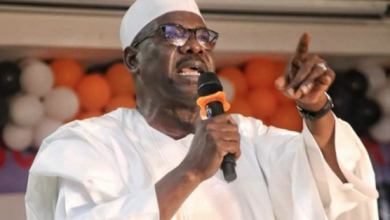
During the budget defence session of the Ministry of Finance and discussions with the Economic Team in Abuja, Senator Sani Musa, Chairman of the Senate Committee on Finance, highlighted persistent challenges in the current budgeting approach.
“The envelope budgeting system has shown serious limitations,” Musa said, adding “We are seeing delayed fund releases, under-execution of capital projects, weak revenue remittances, and misalignment between approved appropriations and actual fiscal outcomes.”
He alao warned that such shortcomings have contributed to widening fiscal deficits, hampered public service delivery, and eroded confidence in the nation’s budgetary process.
The senator called for a comprehensive fiscal impact assessment of past borrowings, emphasizing that loans should drive infrastructure, revenue growth, and long-term economic expansion rather than just provide short-term relief.
Musa further described the envelope approach, which allocates funds incrementally without linking them to measurable results, as outdated.
He urged the adoption of a results-oriented budgeting framework, similar to systems in countries like the United Kingdom, Canada, Australia, South Africa, and Indonesia, where spending is tied to clearly defined outcomes.
He added, “Nigeria cannot achieve global competitiveness while operating on assumptions rather than verified performance metrics.”
Despite his criticisms, Musa commended President Bola Tinubu and the Economic Management Team for reforms already undertaken in the fiscal sector.
In response, Minister of Finance acknowledged that while the payment system had improved—particularly through direct fund disbursement to beneficiaries—there remains room for enhancing efficiency and accountability.
Similarly, Minister of Budget and National Planning, Abubakar Bagudu, noted that the president’s economic reforms are gradually impacting fiscal performance, although Nigeria has not yet fully achieved its budgeting goals.
The meeting also included officials from the Nigeria Revenue Service, Central Bank of Nigeria, NNPC, and Nigeria Customs Service, who provided insights into operational and fiscal performance across government agencies.
The Senate’s position signals a strong push for transparent, results-driven budgeting, emphasising strategic allocation of resources, measurable outcomes, and the prioritization of projects that enhance national development and economic growth.