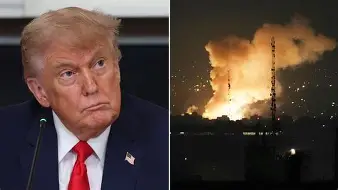
Iran has strongly denounced the latest joint military strikes carried out by the United States and Israel, branding the action a “war crime” and “crime against humanity,” as deep divisions emerged within the United Nations Security Council over the escalating crisis.
Speaking during an emergency session at UN Headquarters in New York, Iran’s Permanent Representative to the United Nations, Amir Saeid Iravani, described Saturday’s coordinated assault as a deliberate and unlawful act of aggression against the Islamic Republic.
The Security Council meeting was convened amid mounting global concern following the strikes, which Iranian officials say targeted civilian-populated areas in several major cities.
Iravani told delegates that the attacks were neither spontaneous nor defensive, but rather “premeditated aggression” and the second such action against Iran in recent months.
He rejected claims by Washington and Tel Aviv that the strikes were justified under the doctrine of pre-emptive self-defence.
“Invoking pre-emptive attack or citing an imminent threat does not provide legal, moral or political justification,” Iravani argued.
He also dismissed Western assertions questioning the nature of Iran’s nuclear programme, insisting that it remains peaceful and compliant with international standards.
Israel Defends ‘Necessary’ Action
Israel’s Ambassador to the United Nations, Danny Danon, countered that the military action was essential to prevent what he described as an existential threat to his country.
According to Danon, Iran’s continued uranium enrichment activities and missile development programme left Israel with no viable alternative.
He accused Tehran of advancing nuclear weapons capabilities in violation of international obligations, while simultaneously expanding its missile arsenal and supporting proxy forces across the Middle East.
Danon maintained that Israel acted before the perceived threat became irreversible.
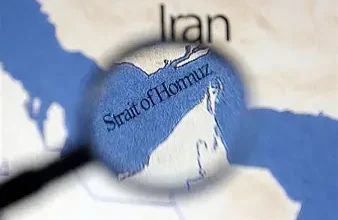
The U.S. representative to the Council, Mike Waltz, said the strikes were aimed at neutralising Iran’s ballistic missile capabilities and limiting its capacity to destabilise international waterways.
Waltz stated that Washington’s objective was to ensure that Iran would never acquire or deploy a nuclear weapon.
He described Iran’s continued pursuit of advanced missile technology, coupled with what he termed its unwillingness to abandon nuclear ambitions despite diplomatic openings, as a growing global threat.
Russia’s envoy, Vassily Nebenzia, criticised the strikes as an unprovoked assault on a sovereign state and a violation of the UN Charter.
He warned that the military action risked igniting broader instability across the region and undermining diplomatic efforts.
Similarly, China’s Ambassador Fu Cong characterised the strikes as “brazen” and called for respect for Iran’s sovereignty and territorial integrity.
He stressed that disputes between nations must be resolved through dialogue rather than force.
France’s representative, Jérôme Bonnafont, urged Iran to meet its international commitments, particularly regarding nuclear transparency and cooperation with the International Atomic Energy Agency.
He noted that compliance with international law is critical to long-term regional and global security.
The United Kingdom’s Ambassador, James Kariuki, who served as Security Council President for February, described the situation as “a fragile moment for the Middle East.”
He affirmed that British forces were engaged in coordinated defensive operations in the region, conducted in accordance with international law.
Kariuki emphasised the need for a swift resolution to prevent further destabilisation.
UN Chief Warns Against Escalation
UN Secretary-General António Guterres expressed alarm over the unfolding events, urging all parties to exercise restraint and prevent a wider regional conflict.
“Everything must be done to avoid further escalation,” he said, reiterating that sustainable peace can only be achieved through dialogue and negotiation.
Guterres noted that the military operation followed indirect talks between Washington and Tehran mediated by Oman, warning that the strikes had jeopardised a potential diplomatic breakthrough.
As the Security Council remains divided, the unfolding crisis underscores widening geopolitical fault lines and raises fresh concerns about the prospects for stability in an already volatile Middle East.