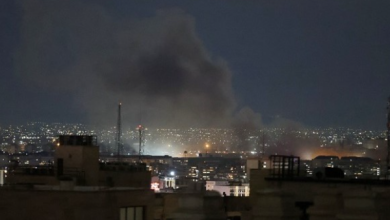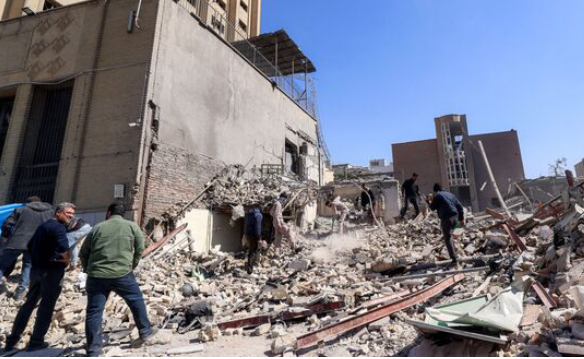
A 4.4 magnitude earthquake rattled the Gerash region in southern Iran on Tuesday, adding another layer of tension to an already volatile area amid intensified military operations by Israel and the United States.
According to the United States Geological Survey (USGS), the tremor struck at a shallow depth of approximately 10 kilometres (6.21 miles).
While residents in nearby rural communities reported noticeable shaking, authorities have not confirmed any casualties or major structural damage.
Gerash is located along the Zagros fold and thrust belt, a seismically active zone where the Arabian and Eurasian tectonic plates converge.
Earthquakes of magnitude 4 are considered relatively common in the region, but the timing of this tremor coincides with an ongoing military escalation, heightening local anxiety.
Israeli military officials announced simultaneous strikes on Tehran and Beirut, targeting Iranian military infrastructure and Hezbollah positions.
The operation focused on missile launchers, air defenses, live-fire arrays, and ballistic missile sites.
“The Israeli Air Force will continue to strike against attempts to arm missile launchers,” the military stated, reaffirming its commitment to neutralizing threats to its personnel and aircraft.
In parallel, the U.S. Central Command reported that American forces had destroyed Islamic Revolutionary Guard Corps command and control facilities, Iranian air defense assets, missile and drone launch sites, and military airfields, as part of ongoing operations in the region.
Iran, in response, launched drone strikes targeting US allies in the Gulf.
On Tuesday morning, drones struck the U.S. embassy in Riyadh, igniting a minor fire.
The embassy advised American personnel and visitors to avoid the compound.
The attack followed a recent drone strike on the U.S. embassy in Kuwait, reflecting escalating hostilities between Iran and Western-aligned forces.
While the earthquake itself caused no confirmed injuries, experts note that the combination of geological activity and military operations underscores the fragility of southern Iran.
“The region faces both natural and human-induced risks,” said a local seismologist, emphasising that infrastructure in rural areas remains particularly vulnerable.
As tensions continue to rise, residents and regional observers alike are watching closely, balancing concern over seismic activity with the ongoing military conflict that has already claimed lives and disrupted diplomatic and civilian operations across the Middle East.