Security agencies in Nigeria’s capital deployed heavily on Wednesday as the fifth day of the escalating war between the United States, Israel, and Iran prompted concerns over potential local spillover.
Armed personnel and tactical units were stationed at key government offices, diplomatic zones, and major transit corridors across the Federal Capital Territory (FCT), with authorities stressing precaution amid mounting global tensions.
Although officials did not cite a specific threat, the unusual security measures reflected anxiety over protests and civil unrest, following violent demonstrations in states such as Niger, Kaduna, and Sokoto linked to the Middle East conflict.
Traffic snarls crippled major routes, including the Abuja-Keffi expressway, while some pedestrians and motorists were detained for attempting to provoke unrest.
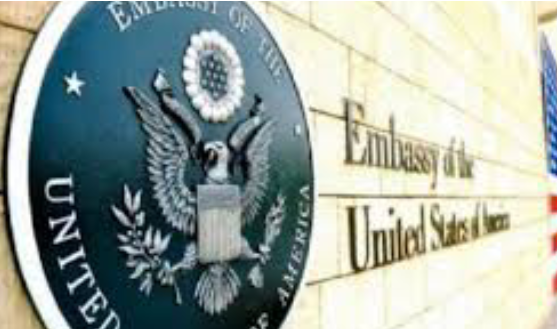
The U.S. Embassy in Abuja suspended all visa appointments for the day, citing heightened security risks.
Americans in Nigeria were advised to remain indoors, avoid public gatherings, and monitor local updates, although emergency consular services remained available.
Meanwhile, Iran postponed the farewell ceremony for the assassinated Supreme Leader Ayatollah Ali Khamenei, reportedly due to security concerns and logistical challenges involving attendance from across the country.
Khamenei, aged 86, was killed alongside family members in joint U.S.-Israeli strikes on Saturday.
Iranian clerics indicated that a successor would be appointed soon, with Mojtaba Khamenei, the late leader’s son, among the top contenders.
Israel, however, issued a public threat, with Defence Minister Israel Katz warning that any chosen successor would be a target for elimination.
Analysts noted that Iran’s political system is structured to withstand leadership crises, with continuity in power lines and military command ensuring stability despite the leadership vacuum.
Domestically, the League of Imams in Lagos urged Nigerians to avoid protests or demonstrations that could destabilise national peace.
Sheikh Abdul Rahman Ahmad emphasised that Ramadan and Lent should be periods of prayer and reflection, warning of potential disruptions similar to past unrest, including End-SARS protests.
“This is a time for sober reflection,” Ahmad said, noting that attempts to escalate tensions could exacerbate economic pressures, including fuel price hikes, and threaten public safety.
On the military front, U.S. Defence Secretary Pete Hegseth confirmed the death of an alleged Iranian operative linked to a 2024 assassination plot against former President Donald Trump, describing the operation as part of a broader US-Israeli campaign.
Hegseth indicated that the campaign against Iran’s missile and defense infrastructure would intensify, with the U.S. deploying precision-guided munitions from an “almost unlimited stockpile.”
Iran reported 1,045 deaths since the U.S.-Israeli strikes began, including top military officials, civilians, and members of Khamenei’s family.
The strikes have triggered retaliatory missile and drone attacks targeting US and Israeli assets in the region.
The conflict has already impacted global energy markets. Goldman Sachs raised its second-quarter 2026 Brent crude forecast by $10 to $76 per barrel, with West Texas Intermediate projected at $71.
Risks to global supply include prolonged disruptions in the Strait of Hormuz, a critical chokepoint for oil and LNG shipments, which could push Brent crude prices to $100 per barrel if exports remain constrained.
Analysts cautioned that while the escalation continues, any further deterioration in regional stability could have wide-ranging geopolitical, economic, and security consequences for countries far beyond the Middle East, including Nigeria.