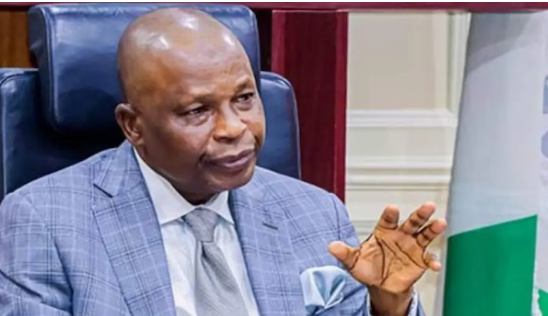
The Attorney General of the Federation (AGF) and Minister of Justice, Lateef Fagbemi (SAN), on Wednesday rejected the proposed Human Rights Defenders Protection Bill, arguing that Nigeria’s existing legal framework already sufficiently addresses human rights protections.
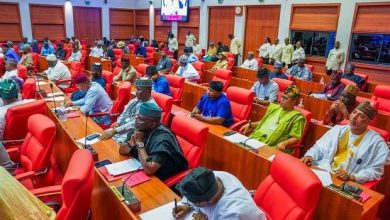
Fagbemi presented the ministry’s position at a public hearing convened by the House of Representatives Committee on Human Rights.
The session also reviewed a separate bill proposing to repeal the National Human Rights Commission Act and the 2010 amendment to establish the National Human Rights Commission Bill, 2025.
According to Civil Society Organisations (CSOs), the Human Rights Defenders Protection Bill is intended to bolster accountability, transparency, and social justice.
The bill aimed to safeguard civil society actors, journalists, lawyers, whistle-blowers, faith-based groups, and ordinary citizens advocating for constitutionally and internationally recognised rights.
Represented by Chief of State Counsel, Mr. Reuben Imarha, Fagbemi argued that introducing another statute could create institutional overlap and legislative confusion, potentially duplicating responsibilities across government agencies.
While acknowledging shortcomings in the current human rights framework, he urged lawmakers to strengthen existing institutions rather than enact new legislation.
The ministry formally opposed the bill and called for its rejection.
On the proposed National Human Rights Commission Bill, 2025, Fagbemi expressed conditional support, but raised concerns about specific provisions.
He highlighted Clause 5(2b), which mandates business owners to obtain an annual human rights compliance certificate.
He warned that this could impede the government’s ease-of-doing-business agenda.
Fagbemi also questioned Clause 15, which allows the commission to borrow funds for human rights prosecutions, insisting that such borrowing should require ministerial or National Assembly approval to prevent misuse.
Clause 16(2b), proposing a quasi-tax requiring multinationals and public or private companies in the financial and oil sectors to contribute 0.3 per cent of annual profits to fund litigation, was similarly flagged for review to align with the ongoing federal tax reform programme.
CSO representatives, however, pushed back against the AGF’s stance.
Mr. Jude Ohanele, Programme Director of Development Dynamics, said passing the Human Rights Defenders Protection Bill would strengthen Nigeria’s democratic institutions, promote transparency, and enhance global human rights credibility.
He argued that the legislation would provide lawful avenues for grievance redress and reassure investors of Nigeria’s commitment to rule-of-law principles.
“The Human Rights Defenders Protection Bill, 2024 (HB.1867) is a landmark legislative initiative that reflects Nigeria’s commitment to democracy and constitutional governance,” Ohanele stated, urging the House of Representatives to expedite its passage.
Chief Tony Ojukwu, Executive Secretary of the National Human Rights Commission, added that businesses should integrate human rights principles into their operations.
He noted that the Human Rights Fund, created in 2010, had yet to be funded and that the proposed bill would generate resources through tax mechanisms to support litigation and enhance enforcement of commission decisions via the Federal High Court.
Mr. Clement Nwankwo, Executive Director of the Policy and Legal Advocacy Centre (PLAC), commended the commission’s efforts but stressed the need for legislative action, urging the National Assembly to approve the commission’s requests and ensure the bill’s passage before August.
The hearing highlighted the tension between government concerns over regulatory overlap and civil society advocacy for stronger statutory protection of human rights defenders.