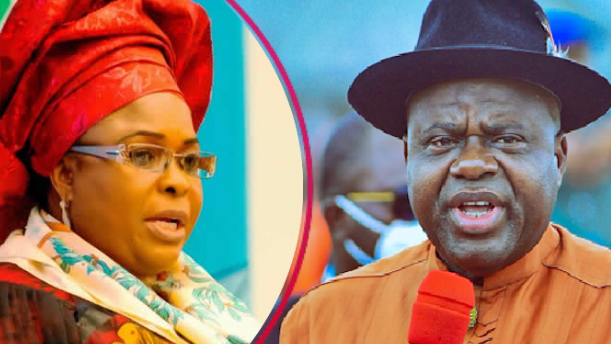
Nigeria’s former First Lady, Patience Jonathan, and Douye Diri have expressed differing views on the campaign for increased representation of women in politics.
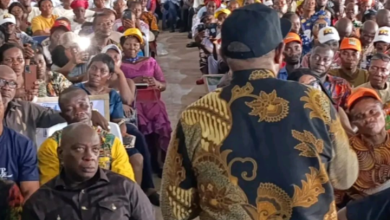
The discussion took place during the 2026 women’s conference organised by Pan Niger Delta Forum (PANDEF), where leaders, activists and stakeholders gathered to deliberate on strategies to strengthen women’s participation in governance across the Niger Delta and Nigeria.
Addressing participants at the conference, Mrs. Jonathan urged Nigeria and other African countries to adopt systems similar to those in developed nations that encourage greater participation of women in political leadership.
She pointed to examples in some African countries where affirmative action policies have been introduced to guarantee a certain percentage of seats for women in political institutions.
According to the former First Lady, creating supportive structures and policies would enable more women to take active roles in governance and decision-making processes.
Mrs. Jonathan also stressed the importance of unity among women in the Niger Delta and across the country, calling on them to put aside political affiliations and personal differences in order to collectively pursue the cause of women’s rights and empowerment.
She maintained that cooperation and solidarity among women were essential in achieving meaningful progress in political representation.
Governor Diri, however, expressed reservations about the idea of reserving special seats for women in the National Assembly.
While acknowledging that such a proposal could serve as a temporary measure, the governor argued that long-term solutions should focus on full inclusion rather than separate provisions.
He maintained that women possess the capacity to compete effectively in politics without special considerations.
“I do not want our women to be treated as second-class citizens,” the governor said, noting that in countries such as the United Kingdom and the United States, women contest political positions without designated seats reserved specifically for them.
According to him, the political system in Nigeria needs structural reforms that would allow women to participate freely and equally in politics.
Governor Diri emphasised that women in Nigeria have excelled in many professional fields including academia, medicine, engineering and law, and therefore should confidently demand equal opportunities in political leadership.
He also highlighted efforts by his administration to increase women’s involvement in governance in Bayelsa State, while acknowledging that achieving gender balance in political representation remains a significant challenge.
Earlier, the National Women Leader of PANDEF, Grace Ekong, stressed that education, skills, exposure and experience were critical for women seeking to participate effectively in politics.
She urged women in the Niger Delta to become more proactive in public affairs and contribute meaningfully to the development of the region.
Ekong noted that the Niger Delta produces much of Nigeria’s wealth yet remains in need of greater infrastructure and environmental protection.
She encouraged women to pursue education and ensure their children are equally educated so they can play significant roles in the country’s political and economic life.
PANDEF leaders at the conference reiterated the need for unity and proactive engagement among women, stressing that increased participation in governance would strengthen development efforts in the Niger Delta and Nigeria as a whole.