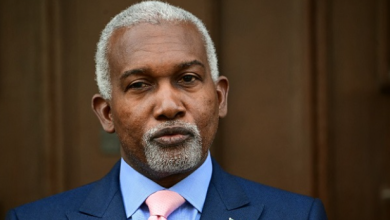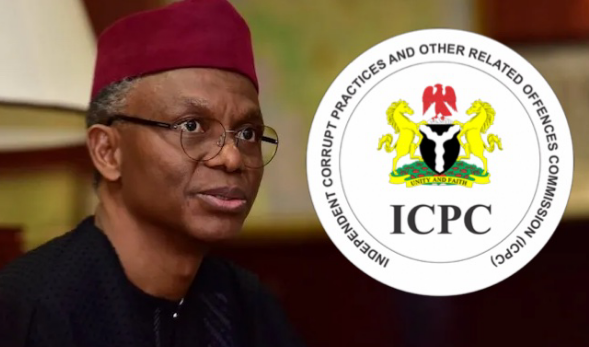
Former Kaduna State governor, Nasir Ahmad El-Rufai, has explained why he declined to answer questions from the Independent Corrupt Practices Commission (ICPC), stating that his decision was based on his constitutional right to remain silent.
El-Rufai, who is currently under investigation by the anti-graft agency, submitted two handwritten statements to investigators on February 19 and 20, 2026, while under caution and in the presence of his legal counsel, Ubong E. Akpan.
In the statements, the former governor insisted that the investigation against him was politically motivated and maintained that he would only respond to any allegations before a court of law.
In his first statement dated February 19, El-Rufai acknowledged reading and understanding the cautionary notice issued by investigators before explaining his decision not to respond to questions.
He outlined his background, noting that he was born in Dandawa in Katsina State in 1960 and grew up mainly in Kaduna State.
He added that he attended Ahmadu Bello University for his first degree in Quantity Surveying and later pursued further studies at Harvard University and the University of London.
The former governor also highlighted his professional and public service career, which includes serving as Director-General of the Bureau of Public Enterprises between 1999 and 2003, Minister of the Federal Capital Territory from 2003 to 2007, and two terms as governor of Kaduna State between 2015 and 2023.
He told investigators that he now lives mostly in Egypt with members of his family and his 96-year-old mother.
El-Rufai further stated that he is a leading member of the African Democratic Congress (ADC), which he described as a key opposition party in the country.
According to him, his political affiliation is the real reason behind the investigation.
“I have, on the advice of counsel, decided to exercise my right to silence,” he wrote, adding that he would not respond to any questions during the interrogation.
The former governor argued that after nearly two years of investigations, the anti-corruption agency should present its findings before a judicial tribunal rather than continue questioning him.
He maintained that he would only address the allegations in a court of law where an independent judge could determine the legality of the claims.
In a follow-up statement dated February 20, El-Rufai reaffirmed his position after investigators presented additional documents for clarification.
He stated that he would continue to rely on his constitutional right to silence and would only respond to the issues raised when they are presented before a competent court.
Meanwhile, the ICPC had earlier obtained a 14-day remand order from a Chief Magistrate Court in Bwari to facilitate its investigation into the matter.
The order, granted to the anti-graft agency, was scheduled to expire on March 5, 2026.
The ICPC has not publicly disclosed the full details of the allegations under investigation, but the case has attracted attention amid ongoing debates about anti-corruption enforcement and political rivalry in Nigeria.