Concerned NDC Stakeholder Reacts To Bogus Prophesy Of Primate Elijah Babatunde Ayodele On the 2027 General Elections And Fate of the Opposition,NDC By Daniel Wariyai, Sagbama

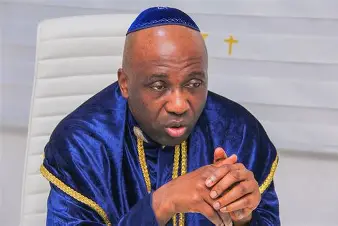
A concerned stakeholder of the Nigeria Democratic Congress (NDC), Hon. Amatare Mozimo, has noted with disdain the widely circulated prophecy attributed to one Primate Elijah Babatunde Ayodele, leader of the INRI Evangelical Spiritual Church, predicting doom towards the prospects of the Nigeria Democratic Congress and its leader and vision bearer, Senator Seriake Dickson, in the 2027 general elections.
Ordinarily, the NDC would not consider it necessary to respond to prophetic speculations about electoral outcomes as Nigeria is a constitutional democracy where the fate of political parties is determined not by prophecies but by the sovereign will of the people expressed through the ballot and administered by the Independent National Electoral Commission (INEC).
However, because such pronouncements may be deliberately designed to mislead sections of the Nigerian public — particularly those who may attach deep spiritual significance to statements by religious figures — it has become necessary to set the record straight.
According to him
“Democracy Is Not Governed by Prophecies”
The NDC stakeholder wishes to remind Nigerians that throughout the history of the country’s democratic process, numerous individuals claiming prophetic authority have made political predictions that turned out to be inaccurate or completely false.
In recent years, the Nigerian public has witnessed a pattern in which sensational political prophecies are announced with great publicity, only for them to fade into silence when the predictions fail to materialize.
Predictions about election outcomes, sudden political collapses, or dramatic governmental changes have repeatedly been made in the past without corresponding fulfillment.
It is therefore important that Nigerians approach such pronouncements with caution and rely instead on verifiable political realities.
He posited that the statements attributed to Primate Ayodele appear consistent with a growing trend in which certain individuals in the garb of religious authority issue dramatic political predictions that generate media attention but rarely stand the test of time.
Nigeria’s democracy cannot and must not be reduced to a theatre of prophetic speculation.
The electoral fortunes of political parties are determined by organization, public trust, policy direction, and the collective will of the electorate—not by pronouncements made outside the democratic process.
If anything, the emergence of such predictions reflects the growing political momentum of the Nigeria Democratic Congress across the country.
Since its emergence under the leadership and inspiration of Senator Henry Seriake Dickson, and Senator Moses Cleopas as Protem National Chairman, the NDC has continued to attract unprecedented attention and support from Nigerians who are eager for a credible political alternative.
Across the six geopolitical zones, the party is steadily building grassroots structures and attracting citizens who are dissatisfied with the current direction of governance in the country.
This growing acceptance has naturally generated anxiety among entrenched political interests who fear the rise of a formidable opposition platform capable of challenging the status quo in the 2027 general elections.
Nigeria’s Opposition Space Is Changing
The Nigerian political landscape today clearly shows that the traditional opposition space is undergoing significant transformation.
Parties such as the Peoples Democratic Party (PDP), Labour Party (LP), New Nigeria Peoples Party (NNPP) and the relatively latest opposition platform of the Africa Democratic Congress (ADC) have in recent times been distracted by internal crises and legal disputes that have weakened their ability to effectively play the role of a united opposition.
Meanwhile, the ruling All Progressives Congress (APC) continues to face widespread criticism from Nigerians over economic hardship, governance challenges, and the general direction of the country.
In this context, the Nigeria Democratic Congress is increasingly emerging as a rallying platform for citizens seeking a credible alternative capable of restoring confidence in democratic governance.
“It is therefore not surprising that attempts are now being made to discourage Nigerians from embracing the NDC through various forms of political messaging—including what may appear to be prophetic pronouncements.
History has shown that whenever a political movement begins to resonate strongly with the people, detractors often resort to propaganda, pessimistic narratives, and fear tactics in an attempt to weaken public enthusiasm.
Unfortunately, the use of religion and prophecy as instruments of political messaging risks undermining the integrity of both democratic discourse and genuine spiritual leadership.
The NDC firmly believes that Nigeria’s political future will be determined not by predictions but by the collective will of millions of Nigerians who desire a better future for their country.
Our party remains focused on building a strong and issue-driven political movement that will address the urgent challenges confronting the nation, including economic revitalization, institutional reform, security, and national unity.
The Nigeria Democratic Congress will continue to expand its grassroots structures, engage citizens across all regions, and present credible policy alternatives ahead of the 2027 general elections.
No prophecy—whether favourable or unfavourable—can substitute for the democratic power of the Nigerian people.
A Call for Responsible Public Discourse
The NDC therefore urges religious leaders, public commentators, and political actors to exercise responsibility in their public statements, particularly when such statements have the potential to influence public perception about democratic processes.
Nigeria’s democracy deserves thoughtful engagement based on ideas, policies, and the aspirations of citizens—not speculative predictions about electoral outcomes.
The Nigeria Democratic Congress remains confident that Nigerians are wise enough to distinguish between political reality and prophetic sensationalism.
The movement for democratic renewal in Nigeria continues to grow stronger every day.
And ultimately, it is the Nigerian people — not prophets — who will decide the future of our country.”