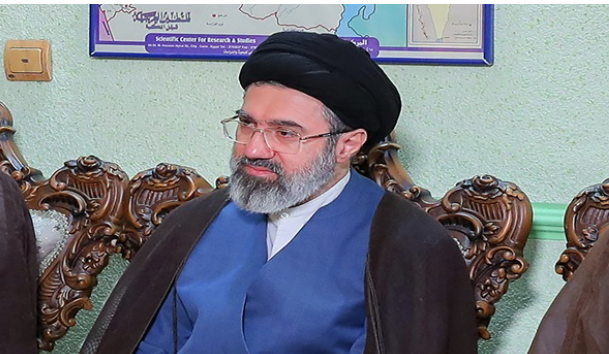
Iran’s ruling clerical establishment has named Mojtaba Khamenei as the country’s new supreme leader, days after the death of his father, Ali Khamenei, in a joint United States–Israeli military strike that escalated tensions across the Middle East.
The appointment was announced on Sunday by the powerful Assembly of Experts, the body responsible for selecting Iran’s supreme leader.
The council said the decision followed a decisive vote by its members amid what it described as continued “aggression” from the United States and Israel.
The elder Khamenei was reportedly killed on February 28 during coordinated strikes linked to the ongoing regional conflict involving Iran, Israel and the United States.
His death triggered political uncertainty in Tehran and intensified fears of a wider war across the region.
At 56, Mojtaba Khamenei becomes the third supreme leader of the Islamic Republic since the country’s political system was established after the Iranian Revolution.
Analysts described him as a conservative cleric with close ties to the powerful Revolutionary Guards.
The leadership change comes amid rising hostilities. Overnight airstrikes reportedly targeted multiple oil facilities around Tehran, igniting large fires and releasing thick smoke that darkened the skies over the capital.
Local authorities warned residents to remain indoors as fumes from the burning fuel could be hazardous.
The conflict has also drawn sharp rhetoric from Washington.
President Donald Trump previously criticised Mojtaba Khamenei’s potential leadership, describing him as a “lightweight” and suggesting that Iran’s leadership must gain international acceptance to remain stable.
Iranian officials, however, rejected the remarks.
Foreign Minister Abbas Araghchi insisted the leadership decision was solely Iran’s internal matter and accused Washington of fuelling the conflict.
Meanwhile, missile exchanges between Iran and Israel continue to heighten tensions. Explosions were reported over Tel Aviv after Iranian missiles were launched toward the country’s commercial hub.
Emergency services confirmed several injuries.
The broader conflict is spreading across the region. Reports indicate drone and missile strikes have affected parts of Saudi Arabia, Kuwait and Bahrain, raising concerns that the war could engulf more Middle Eastern states.
Iranian authorities say hundreds of civilians have been killed and thousands wounded since the conflict intensified, though the figures remain difficult to independently verify.
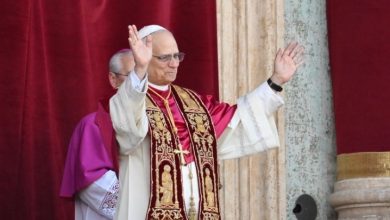
With no clear diplomatic solution yet in sight, global leaders—including Pope Leo XIV—have called for restraint and renewed dialogue to end the fighting.
Analysts warned that the conflict could last weeks if diplomatic efforts fail to halt the escalating military confrontation.