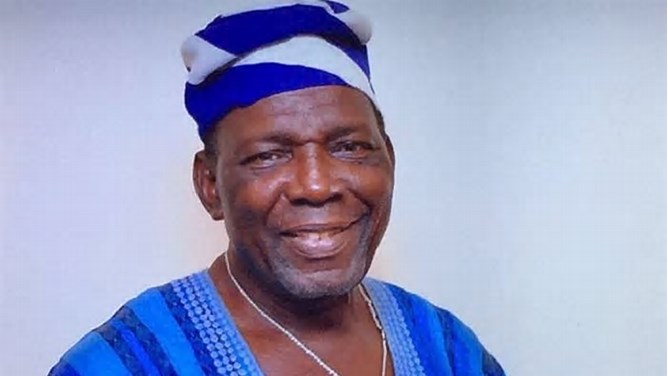
Former Super Eagles head coach, Adegboye Onigbinde, has died at the age of 88, bringing to an end a remarkable career in Nigerian football that spanned several decades.
His death was announced on Monday by his family in a statement signed by Bolade Adesuyi, who described the late football tactician as a devoted family man and a respected figure in the country’s sporting history.
The family expressed gratitude to God for what it described as a fulfilled and impactful life.
“With great gratitude to God for a life well spent, we announce the passing of this great man, a Modakeke High Chief, the first indigenous Nigerian Super Eagles football coach, father, husband, grandfather, great-grandfather, brother and friend, High Chief Festus Adegboye Onigbinde,” the statement read.
The family also acknowledged his immense contributions to Nigerian football and national development, describing him as an exceptional coach whose legacy would remain significant in the sport.
Funeral arrangements, according to the family, would be announced at a later date.
Onigbinde was widely respected for his role in shaping Nigerian football, particularly during his tenure as head coach of the national team.
He led Nigeria to the 2002 FIFA World Cup hosted by Japan and South Korea, returning to the national team’s technical bench that year after his earlier stint as coach of the then Green Eagles between 1982 and 1984.
During his first spell in charge, Onigbinde guided Nigeria to the final of the 1984 African Nations Cup, where the team finished as runners-up after losing 3–1 to Cameroon.
Beyond his work with the national team, the veteran coach also played a key role in football development across Africa and globally.
He served as a technical instructor for both the Confederation of African Football (CAF) and the world football governing body, FIFA.
Throughout his career, Onigbinde was widely regarded as a disciplined tactician and a strong advocate for the growth of indigenous coaching in Nigeria.
His passing has left a significant void in Nigeria’s football community, where he is remembered as one of the pioneers who helped shape the modern era of the national team.