The Federal Government has said the recent increase in petrol prices reflects global market realities, urging Nigerians to appreciate the country’s growing capacity to refine petroleum products locally.
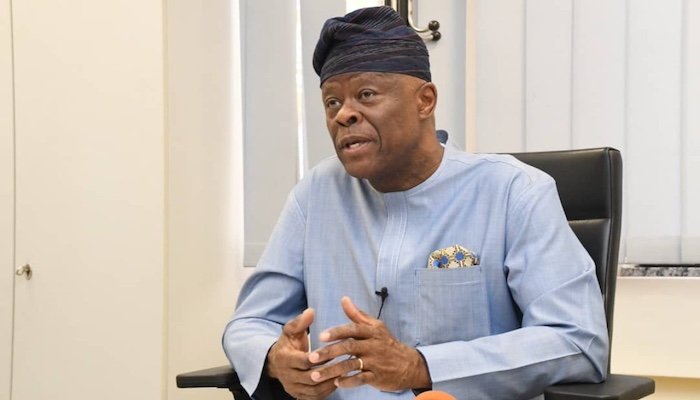
The Minister of Finance, Wale Edun, made the remarks during an interview on Politics Today on Channels Television on Wednesday, as rising global tensions continue to influence the price of crude oil.
According to the minister, the current fuel pricing system reflects the market-driven approach introduced by President Bola Tinubu, which he said replaced long-standing distortions in the petroleum sector.
Edun explained that fluctuations in petrol prices are now part of the normal operation of a liberalised market.
“The market price for petroleum products is what has been instilled by the President,” he said, noting that the system allows prices to rise or fall depending on global conditions.
The minister attributed the latest spike in petrol prices partly to ongoing geopolitical tensions in the Middle East, which have pushed global crude oil prices upward.
As the crisis continues, transportation costs across Nigeria have also increased, placing additional pressure on households and businesses.
However, Edun said price movements reflect natural market dynamics rather than government manipulation.
He pointed to recent adjustments by the Dangote Refinery, which he said demonstrated how market competition could influence prices.
According to him, petrol prices had dropped from about N1,200 per litre to just above N1,000 following changes in global oil prices.
Edun stressed that the presence of local refining capacity has helped cushion Nigeria against international shocks.
The refinery built by billionaire industrialist Aliko Dangote began petrol production in 2024, marking a major shift in the country’s energy sector.
With a capacity of about 650,000 barrels per day, the facility also produces diesel and aviation fuel.
The minister said such investments strengthen the resilience of Nigeria’s economy, particularly during periods of global uncertainty.
He urged Nigerians to support domestic refiners in order to sustain the supply of petroleum products and stabilise the market.
“We should be thankful at this time for the capacity we have in Nigeria to refine crude into petrochemicals and petroleum products,” Edun said.
Officials of the Dangote Refinery have previously explained that crude supplied to the plant is priced using global benchmarks, with an additional premium.
The company said crude is purchased at international market rates, and payments for foreign exchange follow the prevailing exchange rate without subsidy support.
According to the refinery, the naira-for-crude arrangement still reflects global price benchmarks before being converted to the local currency.
Despite rising fuel costs and global economic uncertainty, Edun maintained that Nigeria’s economy remains on a recovery path.
He acknowledged that external shocks including the prolonged conflict in Ukraine and renewed instability in the Middle East — have affected markets worldwide.
Nevertheless, the minister expressed confidence that ongoing economic reforms would strengthen Nigeria’s resilience.
“We are on our way out of the woods,” he said. “As long as we stay the course, we can see the light at the end of the tunnel.”